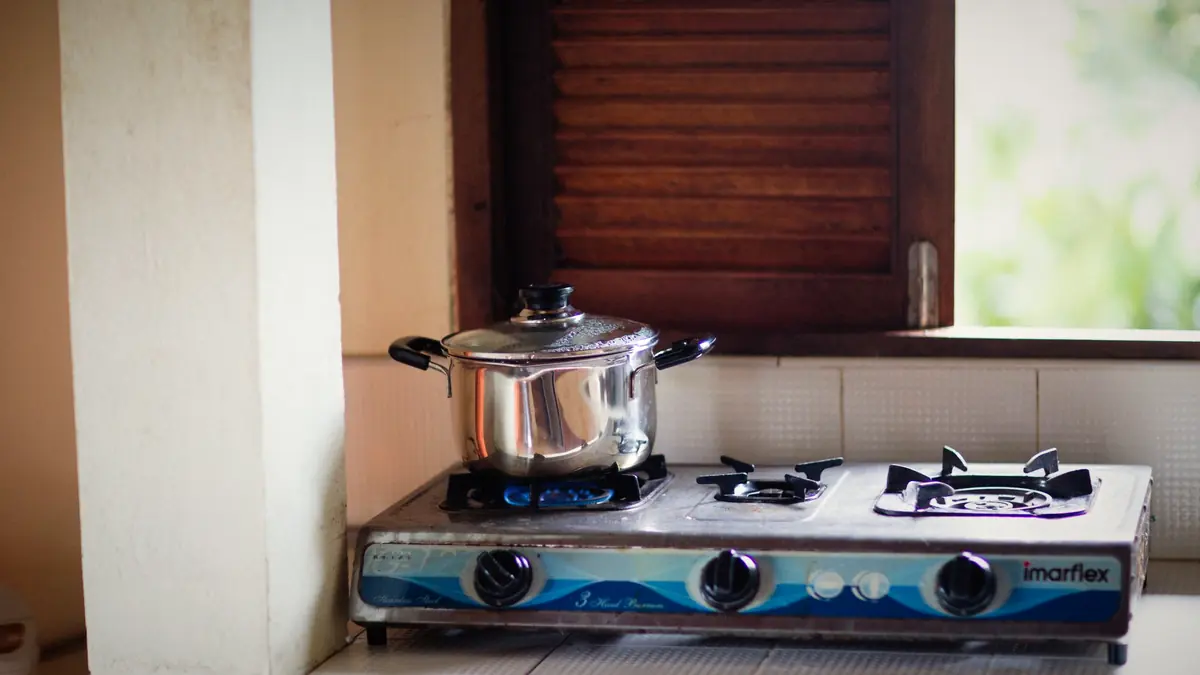
Yes, water can damage a gas stove when floodwater reaches its igniters, spark module and gas valve, and the same risk applies to a generator’s windings and control board. Floodwater leaves corrosion and electrical shorts that a quick wipe-down never reaches, so an appliance that looks dry can still fail or spark days later. A wet burner may not light, a submerged generator can short its motor, and the safe path after a flood in Kent, WA keeps the gas and power off until each appliance is checked. Whether the loss counts as water damage or flood damage also decides how the cleanup and any insurance claim proceed.
Can Floodwater Damage a Gas Stove?
Yes, floodwater can damage a gas stove, because the water corrodes its gas valve and shorts the igniters and spark module. Water shorts the igniter the moment the spark module sits in moisture, and floodwater corrodes the gas valve from the inside where a cloth never reaches. A sealed burner can look fine on the surface while moisture sits inside the burner holes and gas orifice.
A short spill is a different problem from standing floodwater. A cup of water boiled over on a sealed burner usually recovers once the burner dries and lights evenly again. Standing floodwater that submerges the control panel is a far more severe loss, because the water reaches the electronics and the valve at the same time.
The severity decides the next step. A dried spill may let the burner light again, while a submerged stove needs a technician before any gas flows.
What Does Floodwater Do to a Stove’s Burners, Igniters and Gas Valves?
Floodwater damages three parts of a gas stove first: the burner ports, the electronic igniter and the gas valve. Each part fails in a different way, and the damage often stays hidden until the burner refuses to light or the knobs stop responding.
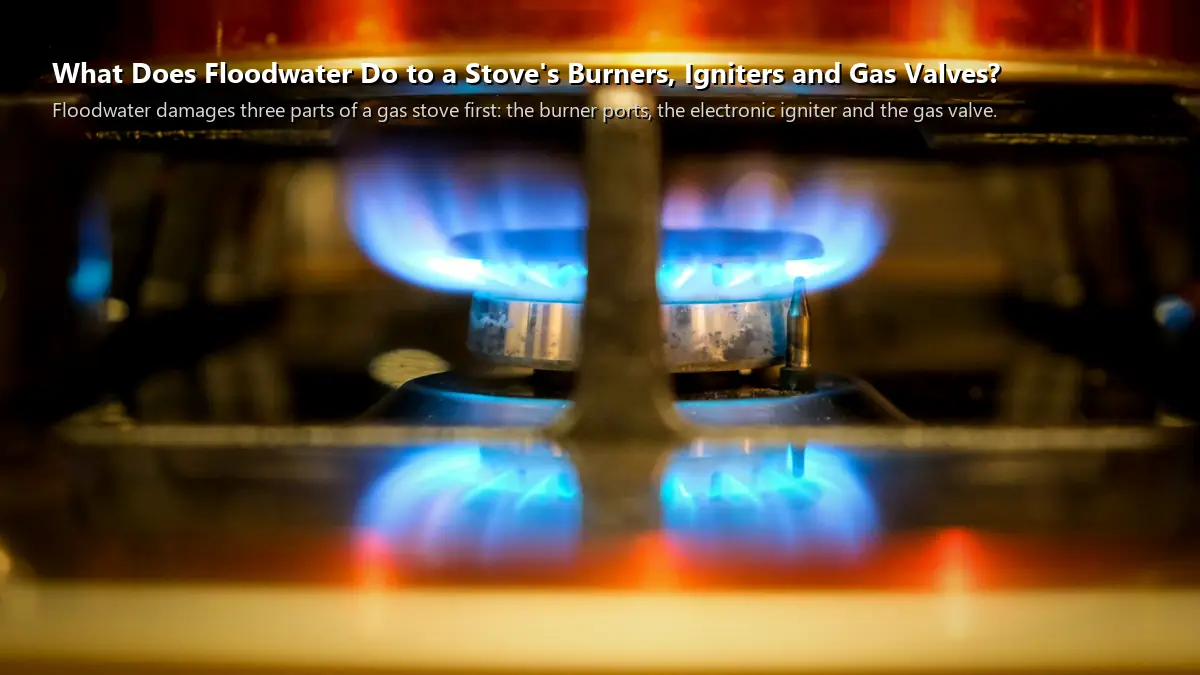
The main components floodwater attacks on a gas stove are:
- Burner ports and caps: rust and sediment block the flame holes and distort the flame pattern.
- Electronic igniter and spark module: moisture shorts the spark and the burner clicks without lighting.
- Gas valve and orifices: mineral residue and corrosion restrict gas flow and cause uneven heat.
- Control board and knobs: trapped water corrodes the contacts and causes intermittent faults.
Corrosion keeps advancing after the water is gone, which is why a dried-off stove can still fail weeks later.
Can Floodwater Damage a Generator?
Yes, floodwater can damage a generator, and a submerged unit must never be started while wet. Floodwater shorts the windings, water seizes the alternator, and moisture corrodes the control board and fuel system. Starting a wet generator can short the stator and rotor, and running a flood-soaked fuel system risks fire.
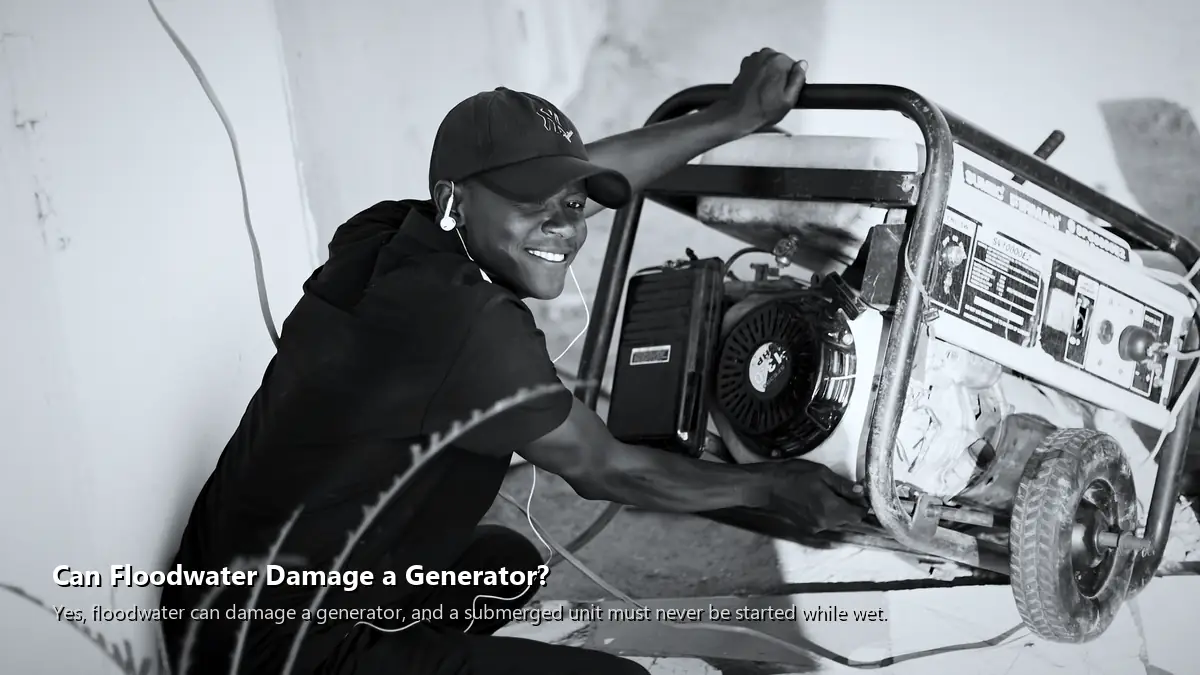
A portable generator left in a flooded garage or crawl space faces the same risk as a stove. Consumer Product Safety Commission guidance states that a generator exposed to water needs inspection and drying by a qualified technician before use, because wet electrical parts can shock an operator or start a fire (CPSC, 2023). In a Kent, WA home, a generator stored low in a garage or crawl space sits exactly where rising water collects first.
How Do You Check Whether a Flooded Gas Appliance Is Safe to Use?
To check a flooded gas appliance, you shut off the gas and power first, then confirm it is fully dry and shows no corrosion before it runs again. Drying has to reach the internal parts, not just the surface, because wet materials should be dried within 24-48 hours to limit further damage and mold growth (EPA, 2024). A restoration crew dries the structure to IICRC S500, the standard restoration companies follow, so the room around the appliance reaches a dry target and does not re-wet the controls.
The steps to check a flood-damaged gas appliance are:
- Shut off the gas supply and unplug the appliance at the breaker.
- Keep it off and do not test the burner or start the generator while any part is wet.
- Open the panel so the controls, igniter and valve can air-dry.
- Have a qualified technician inspect the gas valve and electrical controls before use.
- Watch for a clicking burner, a gas smell or a tripped breaker after reconnection.
A gas smell or repeated clicking after reconnection means stop and keep the appliance off.
Should You Repair or Replace a Flood-Damaged Appliance?
You should replace a flood-damaged gas appliance rather than repair it when floodwater has reached its gas valve or electrical controls. The decision turns on how far the water reached, not on how clean the appliance looks once dry. Manufacturer and Consumer Product Safety Commission guidance generally warn against reusing gas or electrical appliances that floodwater has submerged (CPSC, 2023).
| Situation | Repair is reasonable | Replace is safer |
|---|---|---|
| Light boil-over on a sealed burner | Yes, once the burner dries and lights evenly | Not needed |
| Igniter wet but valve and board stay dry | Yes, after a technician confirms the valve is dry | Not needed |
| Floodwater reached the control board | No | Yes, corroded electronics fail without warning |
| Generator submerged past the alternator | No | Yes, the windings and alternator hold hidden damage |
Once the safe appliances are identified, the next question is how the flood itself is cleaned and documented.
Is It Water Damage or Flood Damage, and Why Does That Change the Cleanup?
The key difference between water damage and flood damage is the source: floodwater that rises from outside is treated differently from a burst pipe inside the home, and that decides both the cleanup steps and the insurance outcome. Floodwater that enters from outside is often contaminated and may fall under a separate National Flood Insurance Program policy rather than a standard homeowner policy (FEMA, 2024). That source difference changes how the appliances and the structure are cleaned, dried and documented.
If floodwater reached the stove, the generator or other appliances, the next step is professional flood cleanup in Kent, WA, which documents each affected appliance for the claim.
Frequently Asked Questions About Water and Gas Stoves
What happens if water gets on a gas stove?
When water gets on a gas stove, it usually just needs drying, but water that seeps into the burner holes or igniter can stop the burner lighting. A surface splash wipes away with no harm. Water that reaches the spark module or flame holes stops the burner until those parts dry fully.
How long does it take for water to evaporate on a stove?
Surface water on a stove evaporates in a few minutes once the area is warm and ventilated, but water trapped inside the burner or igniter can linger for hours. The trapped moisture is the real problem, not the visible surface water you can wipe away.
Is it bad if water boils over on a gas stove?
Yes, a boil-over can be bad for a gas stove, because the spillover floods the burner and can extinguish the flame while gas still flows. An extinguished flame with the gas still on releases unburned gas into the kitchen. Repeated spillover also corrodes the igniter, so the burner clicks without lighting during later operation.
Why won't a gas burner light after it gets wet?
A gas burner won't light after it gets wet because moisture shorts the spark igniter or water blocks the flame holes. Dry the burner cap and ports, clear the holes with a straightened pin, and let the igniter dry fully before retrying. If the burner still clicks without catching, the spark module may need replacement.