Kent, WA
Hotel Water Damage Restoration in Kent, WA – Rooms Back in Service Faster
A single overflowing tub or failed supply line in a hotel can take several rooms and a corridor out of service. A local water damage restoration contractor traces the water, dries rooms and corridors with quiet equipment placement and gets rooms rentable again.
- Serving Kent, WA
- Floor-to-floor
- leaks reach rooms below
- Room by room
- moisture records
- S500
- IICRC drying standard
How One Hotel Room Leak Reaches Others
Hotel water damage restoration in Kent starts with tracing where the water went, because in a hotel it almost never stays in one room. Guest rooms are stacked floor over floor and lined up wall to wall, with bathrooms back to back and plumbing shared between them. Water from one room runs under the shared wall into the next, down through the floor into the room below and out under the door into the corridor. Kent’s hotels sit mainly along the highway corridors and near the valley’s business parks, serving travelers and crews on work trips, and most have several floors of near-identical rooms. A leak found in one room usually means four or five rooms need to be checked: the room itself, the ones on each side, the room below and the corridor outside.
The first hour after a leak is found follows a short list:
- Shut off the water at the fixture, the room’s valve or the riser.
- Move the guest in the affected room, and check the rooms on each side and below before the next guests arrive.
- Block the affected and adjacent rooms in the reservation system.
- Lay towels at the room door so the water does not spread down the corridor.
- Photograph the source, the room, the corridor and the ceilings below.
- Call the number on this page to start extraction.
Overflowing Tubs and Failed Supply Lines
Guests leave tubs running, and supply lines to sinks, tubs and ice machines fail at the fittings. Tub overflow water is usually clean or gray water, depending on what was in the tub (IICRC S500). The water runs across the bathroom tile, under the threshold into the carpeted room and under the wall into the bathroom next door, which shares the same plumbing wall.
Leaks Into the Rooms Below
Water that reaches the floor framing comes through the ceiling of the room below, often hours after the leak started. The ceiling stains or sags, and the water runs down the walls behind headboards and furniture. That room is out of service even though nothing happened in it, and it often takes longer to return than the room where the leak began.
Laundry rooms, kitchens and pool equipment rooms add more sources. Commercial washers and their supply hoses, ice machines on every floor and pool pumps and filters all move a lot of water, and they often sit next to or above guest rooms, offices or the lobby.
Drying Hotel Rooms and Corridors Around Guests
A hotel keeps renting rooms while the drying runs, so the equipment has to be placed with guests in mind. The work follows the IICRC S500 standard (IICRC S500).
Quiet Equipment Placement
Air movers and dehumidifiers go inside the affected rooms with the doors closed, not in the corridors where guests walk. Equipment is set away from walls shared with occupied rooms, and the quietest units are used where a wall has to be shared. Power is routed so cords never cross a corridor. The front desk gets a list of affected and adjacent rooms so it can assign guests around them.
Corridor Carpet and Walls
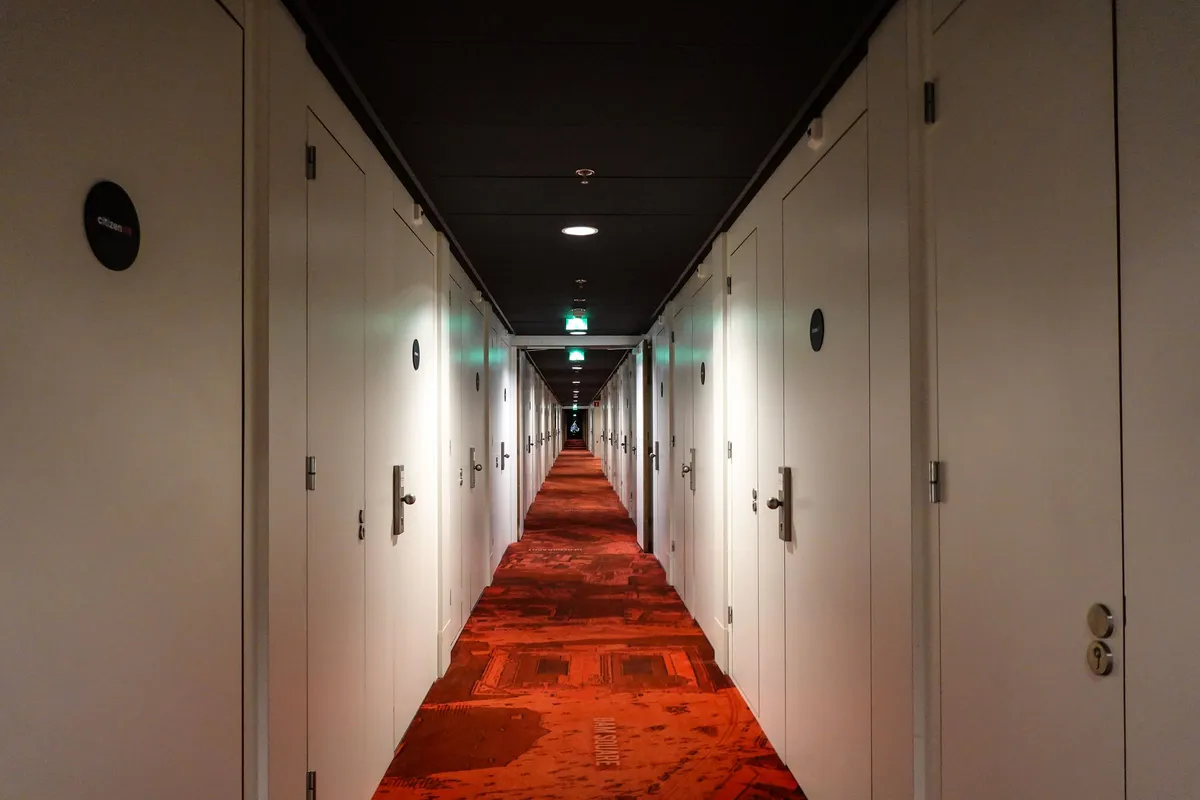
Corridor carpet carries water a long way from the source, and corridors cannot be closed for days. The corridor carpet is extracted right away, then dried with low-profile equipment placed along the wall, out of the walking path, or overnight when traffic is lightest. Wallcovering along the corridor base is checked with a moisture meter, since vinyl wallcovering traps moisture in the drywall behind it.
Getting Hotel Rooms Back in Service
Every day a room is out of order is lost revenue, so the drying is tracked room by room. Each affected room gets its own readings and its own line in the drying log, and rooms are released as soon as they read dry and any removed materials are back in. A room where the water was clean and the carpet could be dried in place may return within days; a room below a leak, where the ceiling was opened, waits for drywall, texture and paint. The housekeeping and maintenance teams get a daily list of rooms ready for cleaning and setup, so a dry room does not sit empty waiting for paperwork. Furniture, mattresses and soft goods that took water are set aside and photographed. Mattresses and upholstered pieces soaked by gray water are replaced, not dried (IICRC S500). Corridor carpet and common areas are scheduled so the hotel never loses its main paths through a floor at the same time.
Guest comfort matters after the rooms reopen too. Musty smells and stains that appear weeks later lead to complaints, and they come from walls or floors that were closed up before they were dry. Final readings in every room, recorded in the log, are the protection against that, and they answer any later question about whether a room was dried properly.
Hotel Water Damage Services Used Most
Four services make up most hotel water damage work. Ceiling water damage comes up on nearly every hotel job, because every upper-floor leak lands on the ceiling of the room below. Wet carpet drying matters because guest rooms and corridors are carpeted wall to wall, and saving carpet in place gets rooms back fastest. Structural drying covers the shared plumbing walls and floor framing between rooms, where hidden moisture causes mold complaints weeks later. And burst pipe water damage covers the supply lines that fail in winter cold snaps or at worn fittings. The full process is on the water damage restoration in Kent page.
Hotel Insurance Documentation
A hotel claim is a room-by-room claim, and the documentation should be built that way from the first hour. Most hotels carry commercial property coverage with business income coverage, which can pay for lost room revenue while rooms are out of service, along with the cost of the damage itself from sudden water such as a burst pipe or failed supply line (Triple-I). Gradual leaks are treated as maintenance, and outside floodwater needs separate flood cover (FEMA).
Keep these records for every affected room:
- Photos of the source and each affected room, corridor and ceiling before cleanup.
- The dates each room was taken out of service and returned.
- Occupancy and average room rate for the same period in earlier months and the year before.
- The contractor’s moisture map, daily drying log by room and written repair scope.
- Receipts for replaced furniture, mattresses and soft goods.
Franchise hotels may also need to notify the brand. Collecting all of it in the first week makes the claim faster, because the adjuster can match each room’s damage, drying and lost nights directly.
How Quotes Work for Hotels
A hotel quote is written after every affected room, the rooms beside and below and the corridor have been read. Six things set it: the water category, the number of rooms and square footage affected, the ceilings and walls opened, the carpet, pad and furniture removed, the drying days and any work timed around occupancy. One room’s overflowing tub and a supply line that ran through three floors are different jobs. Call the number on this page to get a quote for your property.
Hotels across Kent, WA
FAQ
Frequently Asked Questions About Water Damage Restoration
How long does restoration take after water damage?
Restoration takes as long as the drying needs, which is days rather than hours, and then the repairs. Drying ends when moisture readings in each room match dry materials of the same kind (IICRC S500). In a hotel, rooms dry at different rates, so some return to service before others.
How expensive is it to fix water damage?
The cost to fix hotel water damage is set after an inspection of every affected room, corridor and ceiling below. The price depends on the water category, the number of rooms and square footage, the materials removed, the drying days and the repairs. Call the number on this page to get a quote for your property.
How to tell if water damage is permanent?
Water damage becomes permanent when materials cannot be dried back to their original condition: drywall that crumbles, particleboard that swells, carpet backing that separates or mold that has started. Clean water dried quickly rarely leaves permanent damage; gray water or long delays usually do (IICRC S500). Moisture readings decide.
How long is a hotel room out of service after a leak?
A guest room is out of service until its moisture readings match dry materials and any removed drywall, carpet pad or baseboards are replaced (IICRC S500). Rooms where the water was clean and caught quickly return first; rooms below a leak, where the ceiling was opened, take longer.
Can guests stay in rooms near the drying equipment?
Usually, yes. Rooms next to a drying room can stay rented when the equipment is placed away from shared walls, the doors stay closed and corridor equipment is kept low and out of the walking path. Rooms that share a wall with heavy equipment are often held back for the guest's comfort.