Service area · Kent, WA
Water Damage Restoration in Downtown Kent, WA – Older Homes and Shops on the Valley Floor
Kent incorporated in 1890, and its downtown sits on the valley floor along the Green River. When a storm, an older line or a wet crawlspace puts water inside an older home or shop, a local water damage restoration contractor extracts it, dries the building and repairs the damage.
- Serving Kent, WA
- 1890
- Kent incorporated (Wikipedia)
- 2nd
- oldest city in King County (Wikipedia)
- 1962
- Howard A. Hanson Dam (Wikipedia)
A Valley Town Since 1890
Water damage restoration in Downtown Kent works on some of the oldest buildings in the city. Kent incorporated on May 28, 1890, with 793 residents, making it the second-oldest incorporated city in King County (Wikipedia). The name came a year earlier, in 1889, borrowed from the County of Kent in England, which was famous for growing hops, the crop that had made the valley prosperous in the 1880s (Wikipedia). The downtown grew up around the railroad and the farms of the valley floor, close to the Green River.
For most of its first seven decades, the town lived with floods. Winter high water from the Green and White rivers spread across the valley farmland again and again, until the Howard A. Hanson Dam was completed upstream in 1962 and brought the Green River under control (Wikipedia). That dam opened the valley floor to the warehouses and business parks that surround downtown today. The core of the city kept growing too: Kent Station, the shopping and entertainment center next to the Sounder commuter rail station, opened in 2006 and brought a new wave of activity to the downtown streets (Wikipedia).
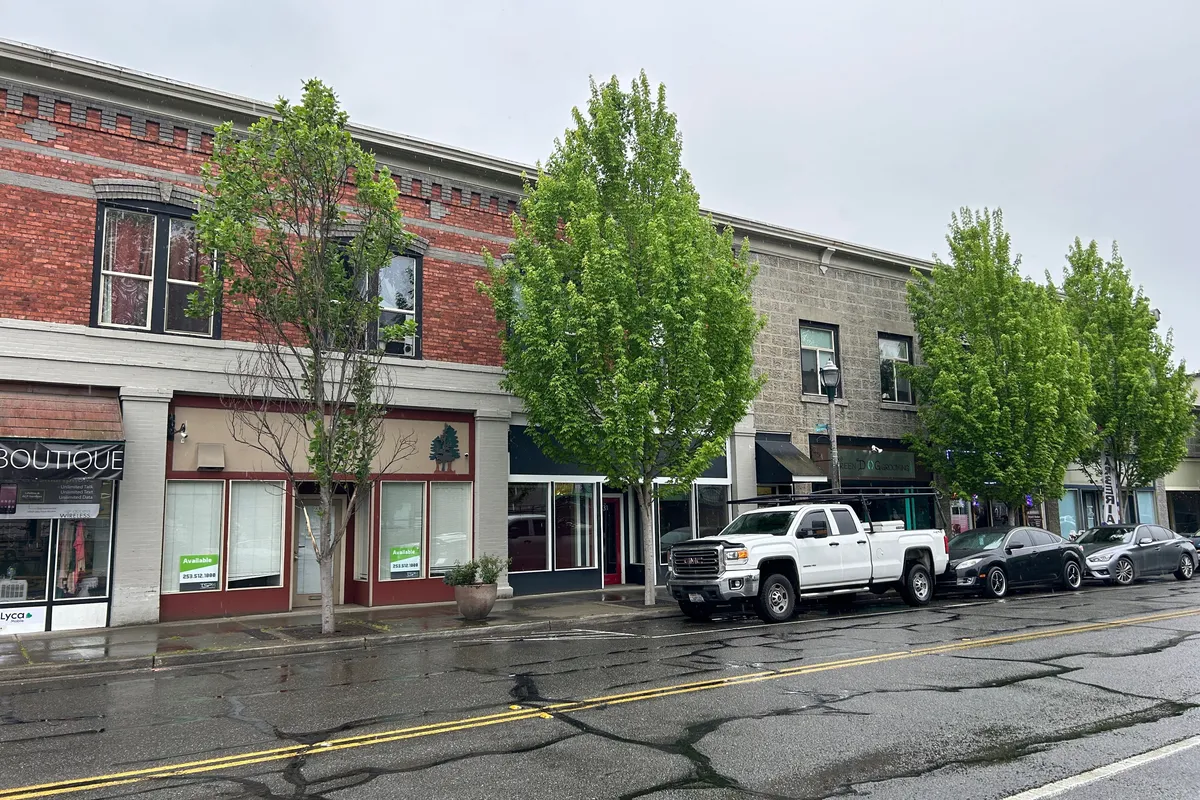
The result is a downtown where buildings from many decades stand side by side. Older houses on the residential blocks sit near storefronts and restaurants along the main streets, with newer apartments and mixed-use buildings filling in between. That mix is what makes water damage here different from the newer subdivisions up on the hills: the materials, the plumbing and the foundations all vary from one building to the next, and so does the way water moves through them.
Mixed-use buildings, with apartments or offices over ground-floor shops, are common on the blocks closest to the city center. In those buildings one leak can involve a residential tenant, a business tenant and the building owner at the same time, each with a different insurer and a different stake in how fast the space reopens. A single moisture map and drying log for the whole building keeps everyone working from the same facts.
Older Homes, Shops and Crawlspaces Near Downtown
The buildings around downtown Kent hold water in ways newer homes do not. Many of the older houses on the blocks around the city center sit on raised floors over vented crawlspaces rather than on concrete slabs. Water from a kitchen or bathroom leak drains through the floor into the crawlspace, where it pools on the vapor barrier and soaks the insulation under the floor, often without anyone seeing it for weeks. Kent’s wet winters, with about 40 inches of rain a year (Wikipedia), keep those crawlspaces damp to begin with.
Plumbing in older buildings has usually been replaced in stages over the years, so a single house can have newer supply lines in one bathroom and original pipes in an outside wall. The joints between old and new, and the older sections themselves, are where leaks start. Interior finishes vary too. Some older homes still have plaster walls, wood lath and original trim, which dry and repair differently from modern drywall.
The shops, restaurants and offices along the downtown streets share walls with their neighbors, so a leak in one space can reach the next. Small apartment buildings and mixed-use buildings with homes over shops add another pattern: water from an upstairs unit or a rooftop drain comes down through the ceiling of the business below. In every case, the first job is finding where the water went, because in older buildings it rarely stays where it started.
Older materials bring two more checks before anything is cut. Homes built before 1978 may have lead-based paint on walls, trim and windows, and federal rules require contractors who disturb painted surfaces in those homes to be lead-safe certified and to follow lead-safe work practices (EPA). Some older building materials, including certain plaster, ceiling textures, pipe insulation and floor tiles, can contain asbestos, and the EPA advises testing before they are disturbed (EPA). Neither one stops the drying, which can start right away, but both affect how wet materials are removed, so the crew samples first and plans the removal around the results.
Water Damage Services for Older Homes and Downtown Shops
Four services fit downtown Kent’s buildings best, and the rest are available across the area:
- Crawl space water damage: pump-out and drying under the raised floors of older downtown homes.
- Burst pipe water damage: older supply lines in outside walls and crawlspaces that split in a cold snap.
- Flood cleanup: storm water that comes in under doors and through foundations on the low ground of the valley floor.
- Structural drying: plaster, older framing and subfloors dried to the readings.
- Water extraction, ceiling water damage, water heater leak cleanup and wet carpet drying cover the other common losses.
- Older houses are covered on the residential properties page, and shops, restaurants and offices on the commercial properties page.
Restoring an Older Home or Shop
Restoring an older building follows the same order as any water damage job, with extra care where the materials are older. The work follows the IICRC S500 standard for water damage restoration (IICRC S500).
Before the crew arrives, a few steps help in an older home or shop:
- Shut off the water at the fixture or the main valve, which in older homes is often in the crawlspace or basement near where the line enters.
- Stay clear of older wiring, light fixtures and outlets in wet rooms, and switch off those circuits only if the panel is dry to reach.
- Lift rugs and move furniture off wet wood floors, which stain and cup quickly.
- Photograph each room, the source and any damaged trim or plaster.
- Call the number on this page to start the extraction.
Extracting the Water and Checking Under the Floor
Standing water comes out first with extractors and pumps. In a raised-floor home, the crawlspace is checked at the same visit, because water that disappeared from the floor above is often sitting underneath. Moisture readings on floors, walls and framing map how far the water travelled before anything is removed.
Drying Plaster, Older Framing and Crawlspaces
Plaster walls hold water longer than drywall and dry more slowly, so they are often dried in place with targeted airflow and readings, rather than cut out at the first sign of moisture. Older framing and thick subfloors take time too. In the crawlspace, wet insulation and vapor barrier are removed, and dehumidifiers dry the joists from below. Drying runs until every marked point matches the dry reference.
Repairs That Match the Original Trim and Walls
Once the readings say dry, the repairs begin. In older homes that means matching the trim profiles, wall texture and flooring that are already there, so the repaired room does not look patched. Plaster that has to come out is replaced with plaster or with drywall finished to match, depending on the owner’s choice. Crawlspace insulation and vapor barrier go back in last.
Keeping a Downtown Shop Open
For shops, restaurants and offices, the wet area is sealed off with plastic so the rest of the space keeps trading. Drying equipment runs inside the containment, and noisy work is timed before opening or after closing where the contractor offers it. Shared walls with the shop next door are read on both sides.
In a leased downtown space, tell the landlord on the first day. Most commercial leases put the building’s roof, shell and shared plumbing on the landlord’s policy and the tenant’s fixtures, stock and improvements on the tenant’s own policy (Triple-I), so both insurers need the same photos and moisture records. Restaurants add kitchen equipment that has to be pulled from the wall so the cavity behind it can be read and dried before food prep resumes.
How Quotes Work in Downtown Kent
A quote for an older downtown home or shop is written after the rooms, the walls and the crawlspace have been read. Five things set it: the water category, the square footage affected, the materials that come out, such as plaster, insulation or flooring, the number of drying days and the repairs needed to match the original finishes. A leak under one sink and a crawlspace that sat wet for a month are different jobs. Call the number on this page to get a quote.
Insurance has one extra point for older buildings. When damaged parts of an older home are rebuilt, the building code may require upgrades the original did not have, such as newer wiring or insulation in an opened wall. A standard homeowners policy pays to repair the damage, but the cost of meeting current code comes from ordinance or law coverage, which is limited or optional on many policies (Triple-I). Check the policy for it before the repairs are scoped, and photograph the original materials so the adjuster can see what was there. Sudden water from a burst pipe or failed appliance is the kind of loss a homeowners policy covers; a slow leak is treated as maintenance, and outside floodwater needs a separate flood policy (FEMA).
FAQ
Frequently Asked Questions About Water Damage Restoration in Downtown Kent
Is standing water in an older home's crawlspace a problem?
Yes. Standing water under an older Downtown Kent home keeps the joists, subfloor and insulation wet, raises the humidity in the rooms above and can grow mold on the framing within 24 to 48 hours (EPA). It needs to be pumped out, the wet insulation and vapor barrier removed and the framing dried until readings match dry wood (IICRC S500).
Can a downtown shop stay open during drying?
Usually, yes. The wet area of a downtown shop or restaurant is taped off or sealed with plastic, the drying equipment runs inside it, and customers use the rest of the space. Loud work such as cutting drywall can be scheduled before opening or after closing where the contractor offers it, while the drying runs around the clock.
Why do older pipes fail in cold weather?
Older homes often have supply pipes in outside walls and vented crawlspaces with little insulation, so they are the first to freeze when arctic air reaches Kent, which has recorded lows of -10 degrees (Wikipedia). Water expands as it freezes and splits the pipe, and the leak starts when it thaws. Older fittings also corrode and weaken over time.