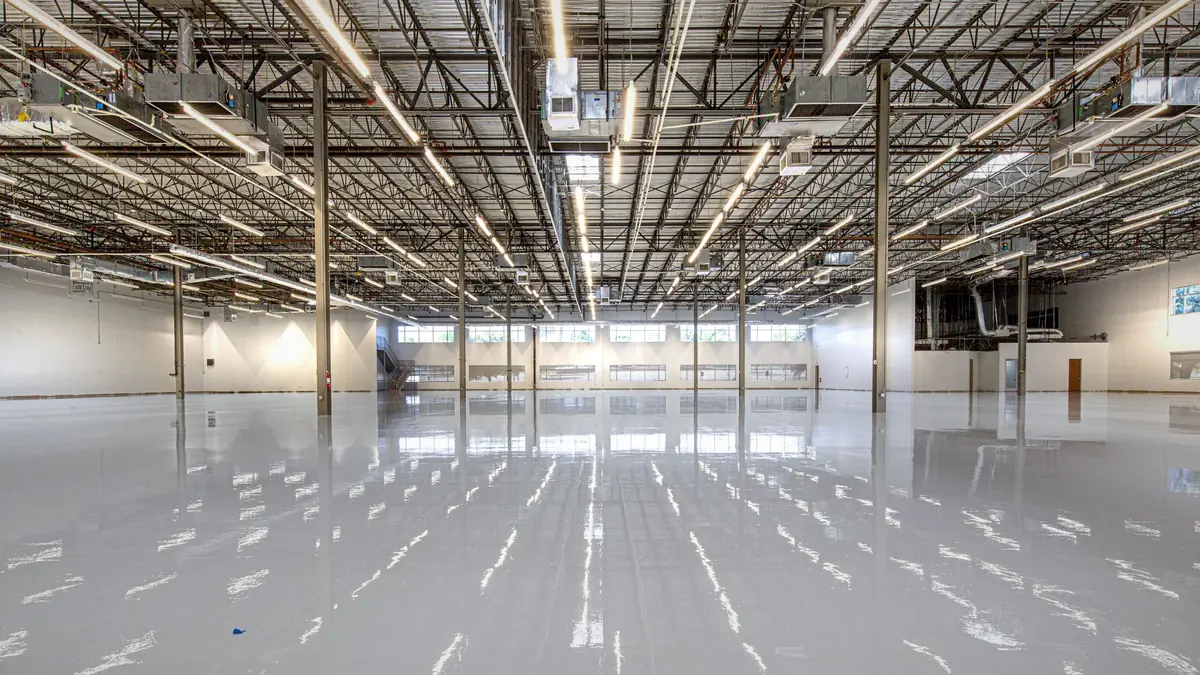
Water damages an epoxy floor from below the slab, not from spills above it: a fully cured coating sheds surface water, while moisture rising through the concrete delaminates, bubbles and whitens the epoxy from underneath. Garage slabs in Kent, WA sit on damp ground and often skip a vapor barrier, so a garage coating fails more from slab moisture than from puddles. Moisture-testing the slab to ASTM standards before coating, and clearing standing water fast, prevents most failures. Epoxy also yellows under UV, chips under impact and lasts a limited number of years in a home.
What Happens if an Epoxy Floor Gets Wet?
When an epoxy floor gets wet, a cured coating sheds the water with no harm, while uncured epoxy or moisture trapped beneath the slab is where real damage begins. Surface water beads on cured epoxy and wipes away. Trapped moisture lifts the coating from the concrete over weeks and months. A cured coating is water-resistant, meaning it repels spills on top, not waterproof, meaning it blocks water permanently from every direction.
The outcomes of a wet epoxy floor fall into three states:
- Surface spills that bead on a sealed, cured coating and clean up with no mark.
- Curing contact where water reaches the resin before it hardens and clouds the finish.
- Subsurface moisture that pushes up through the slab and breaks the coating’s bond.
Subsurface moisture causes the failures worth understanding in detail.
Can Epoxy Get Wet While Curing?
No, epoxy must not get wet while curing, because liquid water disrupts the resin’s ability to bond and cure before it hardens. During curing the resin moves from liquid to semi-solid, and any water that lands on it in that window reacts with the chemistry and leaves a milky blush that will not buff out. A moderate installation temperature and relative humidity below 60 percent, the ceiling most epoxy manufacturers set, keep the cure clean. A coating that blushes during curing stays permanently clouded.
Is Cured Epoxy Waterproof or Only Water-Resistant?
Cured epoxy is water-resistant rather than fully waterproof, because only a resin-rich poured system blocks water permanently while most garage coatings resist it temporarily. A thick, resin-rich poured floor seals the surface completely, while a thinner aggregate or roller-applied coating holds water off for a time, then lets it through. Seams, hairline cracks and worn high-traffic spots open small paths where moisture reaches the concrete. Age and abrasion turn a water-resistant coating into a permeable one.
How Does Moisture Under an Epoxy Floor Cause Damage?
To damage epoxy from underneath, moisture vapor passes up through the concrete and breaks the bond between the coating and the slab. This mechanism, moisture vapor transmission, is the failure most competitors underplay, and it does not need a spill above the floor to happen. Vapor pressure pushes against the back of the coating until the bond releases and the epoxy delaminates.
The forms subsurface moisture damage takes are:
- Peeling that lifts the coating away from the slab in sheets.
- Bubbling that traps vapor in blisters under the surface.
- Whitening that leaves a cloudy blush where moisture pools beneath.
- Cracking that spreads from edges once the bond fails.
Each form starts under the coating, not on top of it.
What Does Water Damage on an Epoxy Floor Look Like?
Water damage on an epoxy floor looks like milky white patches, lifting edges and soft bubbles that spread from seams or low spots. These are the visible signs a homeowner can check without tools, distinct from the hidden mechanism underneath.
- Milky or chalky white patches across the finish.
- Lifting edges peeling back from seams and corners.
- Soft bubbles or blisters that press in under a thumb.
- Hairline cracks fanning out from low areas of the floor.
Any of these signs points to moisture already working under the coating.
Why Does Moisture Push Up Through a Concrete Slab?
Moisture pushes up through a concrete slab because concrete is porous and ground water wicks upward as vapor, especially where no vapor barrier sits under the slab. Hydrostatic pressure drives ground water into the pore network, and the vapor migrates to the dry upper surface where the coating sits. Kent, WA sits in a Puget Sound climate of wet winters and a high water table, so local slabs stay damp for long stretches. Restoration professionals measure the moisture level using recognized methods such as ASTM F2170 relative humidity probes and F1869 calcium chloride tests before any coating is applied (ASTM, 2023).
Does Water Damage an Epoxy Garage Floor Differently?
Yes, a garage epoxy floor fails more from slab moisture than from spills, because garage slabs sit directly on damp ground and are often poured without a vapor barrier. Interior living-space floors usually rest on a sealed subfloor, while a garage slab contacts wet soil year-round. In Kent, WA, rain, winter snowmelt and vehicles tracking in water keep a garage slab loaded with moisture that migrates up into the coating. A garage coating applied over an untested slab carries the highest risk of failing from below.
How Do You Prevent Water Damage to an Epoxy Floor?
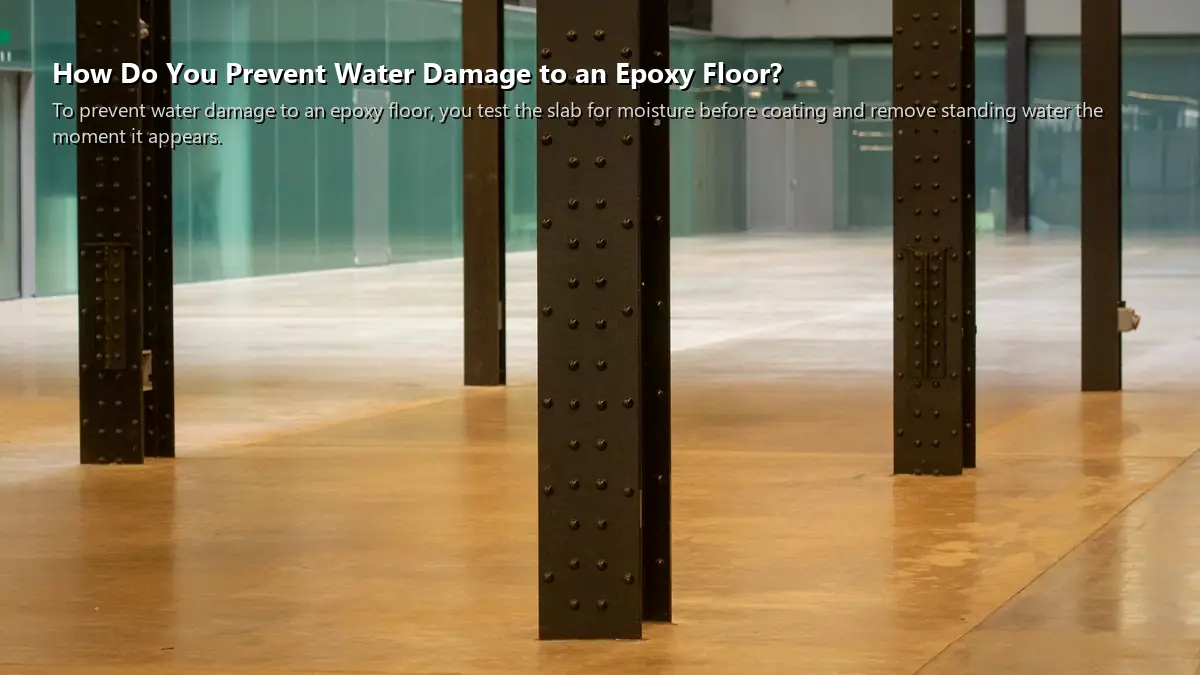
To prevent water damage to an epoxy floor, you test the slab for moisture before coating and remove standing water the moment it appears. The main steps are:
- Test the slab for moisture to ASTM F2170 or F1869 limits before any coating goes down.
- Seal the concrete with a moisture-mitigation primer where the slab lacks a vapor barrier.
- Clean up standing water fast, inside the 24-48 hour window the EPA sets for drying wet surfaces (EPA, 2024, 2024).
- Monitor seams and low spots for early whitening or lifting.
A floor that has already soaked through calls for professional extraction, which a local water damage restoration company handles with structural drying; for carpeted areas next to a coated slab, wet carpet drying in Kent, WA removes the trapped moisture before it spreads.
What Are the Downsides of Epoxy Flooring Besides Water?
The main downsides of epoxy flooring besides water are UV yellowing, impact chipping and a limited service life. These trade-offs matter alongside moisture when choosing a floor coating.
- UV yellowing that ambers a clear coat near sunlit garage doors and windows.
- Impact chipping where dropped tools or heavy loads crack the hard surface.
- Limited service life that ends in recoating after a number of years.
A polyaspartic coating resists UV yellowing better than standard epoxy but costs more.
Does Water Damage Other Floor Types Like Engineered Hardwood?
Water damages softer floor types faster than epoxy, and engineered hardwood is far more vulnerable because its layers swell and separate once soaked. A coated concrete slab survives a quick spill that would delaminate a wood plank in hours. The same can-this-floor-be-saved question plays out very differently on wood, as covered in whether water damages engineered hardwood floors.
Frequently Asked Questions About Epoxy Floors and Water
How Long Does It Take for Water to Damage an Epoxy Floor?
Water takes anywhere from hours during curing to months of trapped slab moisture to damage an epoxy floor, depending on where the water is. Water that lands on uncured resin blushes it within hours and the mark is permanent. Moisture rising through the slab works slowly, delaminating a cured coating over weeks or months before any sign shows.
Is Epoxy Waterproof for a Bathroom?
No, standard epoxy is not reliably waterproof for a bathroom, because constant standing water and steam reach seams and worn spots that a garage coating never faces. A bathroom floor sees daily moisture against every edge and joint, where a water-resistant coating eventually lets water through. A fully sealed, resin-rich poured system performs better than a roller-applied garage coating in a wet room.
How Long Does an Epoxy Floor Last?
An epoxy floor lasts several years to a decade or more in a home, shortened sharply when slab moisture or UV exposure attacks it. A properly tested and sealed slab holds the coating near the long end of that span. An untested garage slab in a wet climate can fail years sooner from moisture pushing up from below.
Is It Cheaper to Tile or Epoxy a Floor?
Epoxy is usually cheaper upfront than tile, because it coats an existing slab instead of adding a separate material and grout. Tile adds the cost of the material, mortar, grout and the labor to set each piece. Epoxy runs lower in most homes, though a failed coating over an untested slab turns into a recoating cost that erases the saving.