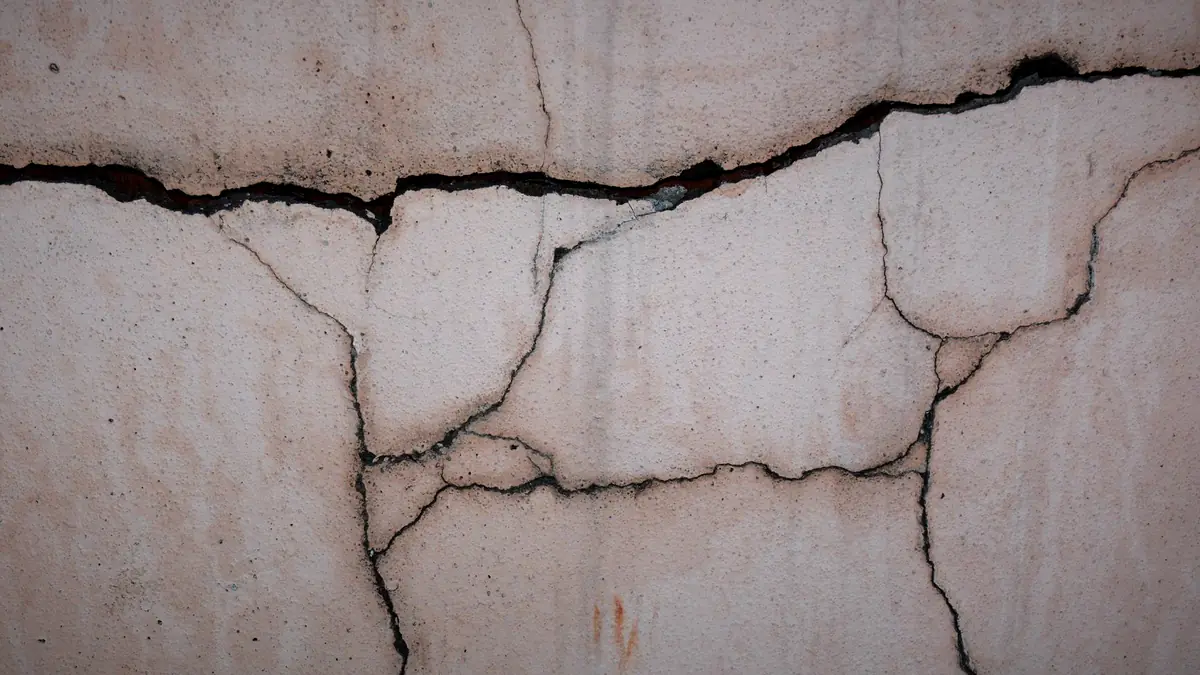
Water can damage a foundation by applying pressure and moving the soil that supports it, which leaves a home with a cracked, settling, or shifting foundation. Water reaches that point through three mechanisms, hydrostatic pressure, expanding soils, and erosion and settlement, and the damage can begin within days of standing water while gradual soil movement builds over months. In a Kent, WA crawl space, the warning signs include new wall cracks, uneven floors, standing water, and a musty smell, and the risk runs higher here because prolonged Pacific Northwest rain keeps the soil saturated and the water table high for much of the year.
Can Water Damage a Foundation?
Yes, water can damage a foundation when it saturates the soil around it or pools against the footings long enough to cause cracking, settlement, or wall movement.
Clean water by itself is not corrosive to concrete. The damage comes from where the water goes: once it soaks into the wrong soils and builds pressure against the structure, that force is what cracks and shifts a foundation. Saturated soil pushes against the wall, and over weeks of wet weather that sideways load finds the weakest points in the concrete.
This applies directly to Kent, WA crawl space foundations, where most homes sit over a shallow crawl space rather than a slab. Water that collects under the house stays in contact with the footings and the soil beneath them, so the pressure never gets a chance to ease. A local water damage restoration company inspects crawl space water damage in Kent, WA to trace where that moisture is entering before it reaches the structure.
How Does Water Cause Foundation Damage?
To damage a foundation, water works through three mechanisms: hydrostatic pressure, expanding soils, and erosion and settlement.
The three ways water acts on a foundation are:
- Hydrostatic pressure: the sideways force of water-saturated soil pressing against a foundation wall.
- Expanding soils: clay-rich ground that swells with water and shrinks as it dries, moving beneath the footings.
- Erosion and settlement: moving water carrying fine soil out from under the footings until the foundation drops.
Each mechanism acts on a different part of the foundation, and prolonged rain can set all three in motion during a single wet Kent, WA season. The sections below break down how each one works on the structure.
What Is Hydrostatic Pressure?
Hydrostatic pressure is the sideways force that water-saturated soil exerts against a foundation wall. After prolonged rain, the water table around the footing rises and the surrounding soil holds more water than it can drain away. That wet soil presses inward against the wall and finds the weak points at existing cracks and cold joints, where one concrete pour met another. The longer the soil stays saturated, the longer that pressure works against the wall, which is why a single storm rarely does the damage that a full wet season can.
How Do Expanding Soils Push on a Foundation?
To push on a foundation, expanding soils swell as they absorb water and shrink as they dry, moving the ground under and beside the footings. Clay soils hold water and change volume as moisture comes and goes, unlike sand or gravel that drains freely. Across Kent’s wet winters and drier summers, that repeated swell-shrink cycle stresses the foundation in both directions. The ground lifts and settles against the footings over and over, and each cycle can widen a hairline crack a little further until the movement becomes visible indoors.
How Do Erosion and Settlement Shift a Foundation?
To shift a foundation, erosion and settlement wash away or compress the soil that keeps footings level, letting one part of the foundation drop. Moving water carries fine soil particles out from under the footings, and voids open where that supporting soil used to be. The foundation then settles into those voids, but rarely all at once or evenly. At ground level that uneven settling reads as sloping floors and stair-step cracks running diagonally through block, brick, or poured walls.
How Long Does It Take for Water to Damage a Foundation?
The time it takes water to damage a foundation ranges from a few days to several months, depending on whether the water is standing against the structure or slowly saturating the soil. Standing water in a crawl space starts affecting wood framing and footings quickly, as the moisture wicks into joists and sill plates and keeps the concrete wet. Gradual soil saturation and the swell-shrink cycle cause slower structural movement that can take months to show at ground level. The EPA advises that wet building materials be dried within 24-48 hours to limit mold and moisture damage (EPA, 2024), which is why standing water under a Kent, WA home is addressed quickly rather than left to drain on its own.
What Are the Signs of Foundation Water Damage in a Kent Crawl Space?
The signs of foundation water damage in a Kent crawl space are visible cracks, uneven or bouncy floors, standing water, and a persistent musty smell.
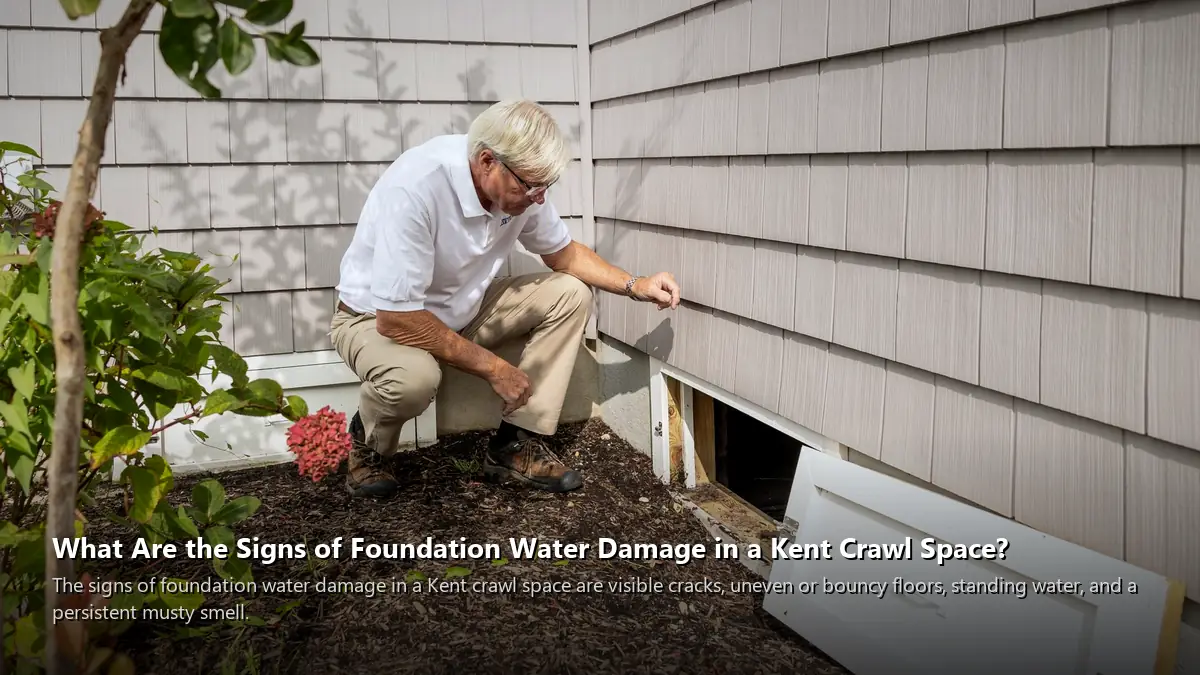
The most common warning signs under a Kent home include:
- Stair-step or horizontal cracks in foundation walls, piers, or concrete block.
- Uneven, sloping or bouncy floors in the rooms above the crawl space.
- Standing water or saturated soil sitting on the crawl space floor after rain.
- Musty, damp odor rising from the crawl space into the living areas.
- Efflorescence (white mineral residue) left on the concrete as moisture evaporates.
Any of these under the house warrants an inspection before the movement worsens. A local restoration crew can trace the source, measure the moisture in the framing and soil, and document the extent before repairs begin.
Why Do Kent Crawl Spaces Face a Higher Foundation Water Risk?
Kent crawl spaces face a higher foundation water risk because prolonged Pacific Northwest rain keeps the soil saturated and the water table high for much of the year. Kent sits in the Green River valley, where the valley floor collects runoff and groundwater sits close to the surface. The soils across much of the area are clay and glacial till that hold moisture rather than drain it, so water lingers around the footings long after the rain stops.
The region’s long wet season compounds the problem. The National Weather Service Seattle office tracks the extended fall-through-spring rainfall that defines the Puget Sound lowlands (NWS Seattle, 2024), and that steady moisture load keeps crawl space soil damp for months at a time rather than days.
Most Kent homes sit on crawl spaces rather than slabs, which places the footings and framing in direct contact with that wet ground. West Hill split-levels are the local exception, built with basements where hydrostatic pressure acts on the walls instead of pooling on a crawl space floor.
Can Foundation Water Damage Reach the Concrete Footings?
Yes, foundation water damage can reach the concrete footings, because standing water and saturated soil attack the concrete itself, not just the soil around it. Once water sits in constant contact with the footings and crawl space walls, it can erode the surface, open cracks, and weaken the concrete over months of exposure. That is a distinct question from how water moves the soil, so the question of whether water can damage concrete footings is worth its own answer.
Frequently Asked Questions About Foundation Water Damage
Will insurance cover water damage from a foundation?
Whether insurance covers foundation water damage depends on the cause, since most homeowners policies pay for sudden, accidental water damage but exclude gradual seepage and flood. A sudden burst pipe that saturates the crawl space may be covered, while a long-term leak or groundwater seeping in over months usually is not (WA OIC, 2024). Flood damage needs separate NFIP coverage and is not part of a standard policy. A homeowner reviewing a residential water damage situation in Kent, WA can confirm the specific terms with the insurer before assuming coverage.
How much does it cost to fix a leaky foundation?
The cost to fix a leaky foundation varies with the cause and extent of the damage, from minor sealing to major structural repair. Minor crack sealing and drainage corrections run $500-$3,000 in most homes, while structural underpinning or footing repair runs $5,000-$25,000 in most homes. A local inspection gives an accurate figure for a specific crawl space, since the price depends on the soil, the access, and how far the movement has already gone.
Can standing water damage a foundation on a concrete slab?
Yes, standing water can damage a slab foundation when it pools against the edge and wicks up through the concrete. Slabs are less common than crawl spaces in Kent, WA, but they still suffer edge erosion, cracking, and moisture intrusion where water collects along the perimeter. Grading the soil away from the slab and controlling roof drainage keep that water from standing against the edge.
Can water damage a foundation in a basement?
Yes, water can damage a basement foundation, usually showing as wall seepage, bowing walls, and water stains along the base. West Hill split-level homes are the main local case in Kent, WA, where the living space sits partly below grade against the surrounding soil. Hydrostatic pressure on the basement walls is the primary mechanism, pushing moisture through cracks and cold joints as the wet ground presses inward.