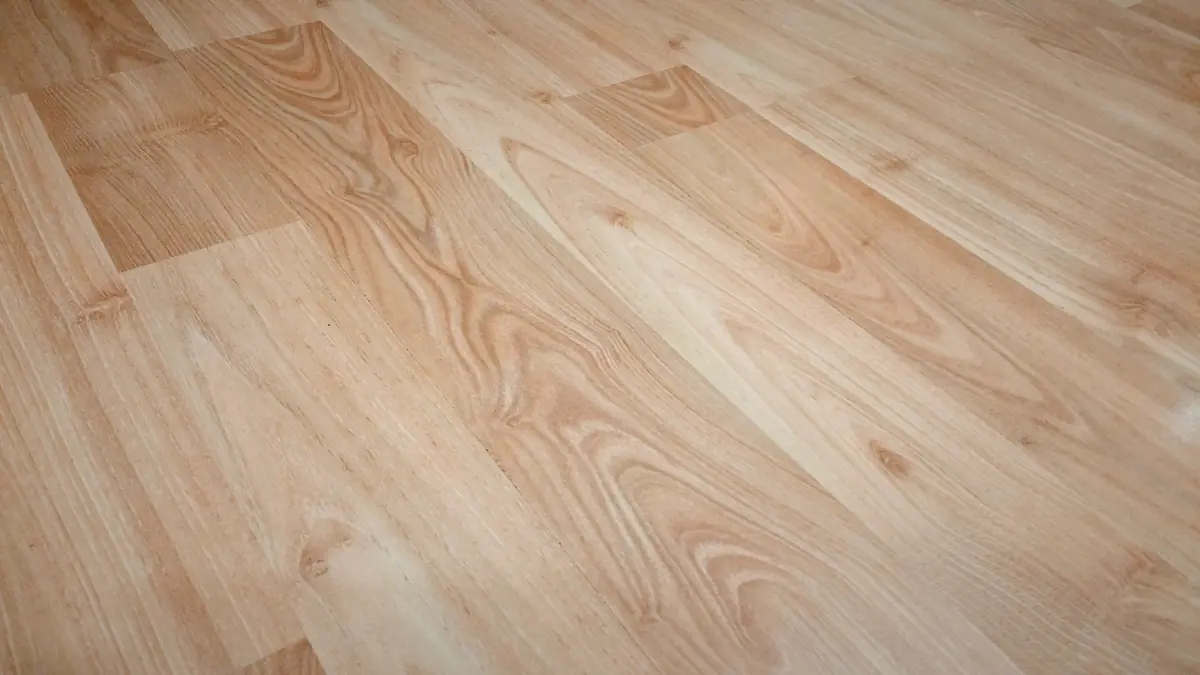
Water can damage laminate flooring: it soaks into the fiberboard core and makes planks swell, cup, and buckle. Standing water ruins laminate within hours to a few days, so a quick, shallow spill dried fast can be saved, while soaked planks over a wet subfloor usually cannot. Even waterproof laminate often needs pulling up, because water gets trapped underneath where it cannot dry. Water-damaged laminate repair runs a few hundred to several thousand dollars in most Kent, WA homes, and fast water extraction is what decides whether the floor is salvageable.
How Does Water Damage Laminate Flooring?
Water damages laminate flooring by soaking into its fiberboard core, where it causes the planks to swell, cup, and buckle. A laminate plank is built in four layers: a clear wear layer on top, a printed design layer beneath it, a high-density fiberboard (HDF) core in the middle, and a moisture-resistant backing. The HDF core is the vulnerable part, because it is compressed wood fiber that acts like a sponge once water reaches it. Water wicks into the core through seams and cut edges, and the swollen fibers cannot return to their original shape.
The main ways water-damaged laminate fails are:
- Swelling along plank edges where the core absorbs moisture and expands.
- Cupping where the edges of a plank rise above its center.
- Buckling where planks lift off the subfloor and tent at the seams.
- Delamination where the wear layer peels away from the swollen core.
- Gapping where swollen planks push apart and open the joints.
These signs appear within hours once water reaches the core, and they signal that the HDF has already absorbed moisture.
Why Does Water Get Trapped Under Laminate Planks?
Water gets trapped under laminate planks because the floating floor sits over a vapor barrier or underlayment that holds moisture against the subfloor. Laminate is not glued down, so water from a spill or leak runs through the seams and pools in the thin layer below the planks. That trapped water cannot evaporate upward through the sealed wear layer, so it sits against the subfloor and the plank backing. This is why wiping the surface dry does little, and why the planks often have to come up for the floor to dry.
How Long Does It Take for Water to Ruin Laminate Flooring?
Water ruins laminate flooring within hours to a few days, depending on how much water there is and how long it sits. A small spill wiped up right away carries little risk, because the water never reaches the seams or the core. Standing water over a soaked subfloor is different, because the HDF core absorbs moisture fast and swelling can begin within hours. The EPA advises drying wet building materials within 24-48 hours to limit structural damage and mold growth (EPA, 2024), and laminate over a wet subfloor rarely beats that window on its own.
Can Water-Damaged Laminate Flooring Be Saved?
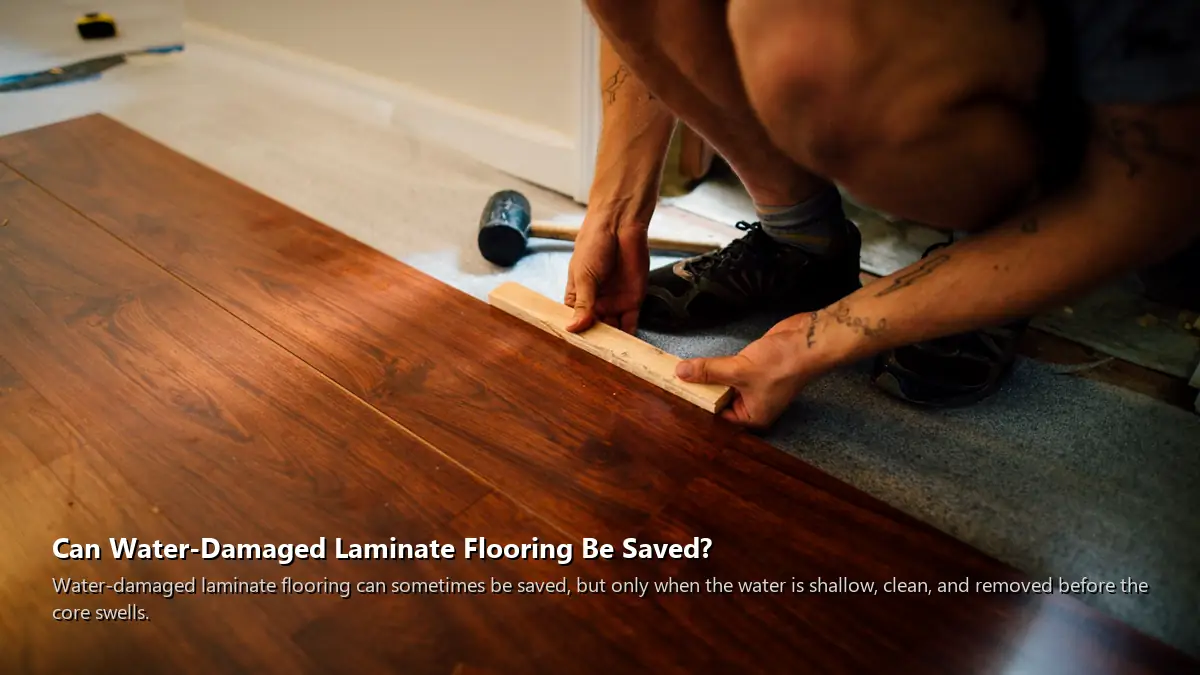
Water-damaged laminate flooring can sometimes be saved, but only when the water is shallow, clean, and removed before the core swells. The outcome depends on the source of the water, how deep it pooled, and how many hours it sat against the planks. Once the HDF core swells, there is no drying it back to its original size, so the decision comes down to catching the water early. The table below shows which situations a restoration crew can often dry and keep versus which ones call for replacement.
| Situation | Can Likely Be Saved | Needs Replacement |
|---|---|---|
| Shallow, clean spill dried within hours | Yes | — |
| Small area of standing clean water, planks lifted fast | Often | — |
| Soaked subfloor left wet more than a day | — | Yes |
| Buckled, cupped, or swollen planks | — | Yes |
| Water from a contaminated source | — | Yes |
Because the save-or-replace call also affects the carpet, padding, and subfloor around the laminate, it fits alongside wet carpet and floor drying in Kent, WA, where a restoration crew checks every flooring type the water reached.
When Can Wet Laminate Be Dried and Kept?
Wet laminate can be dried and kept when the water was clean and shallow and the planks show no swelling, cupping, or lifting. The window is narrow: the standing water has to be extracted quickly, a few planks are lifted so the subfloor and underlayment can dry, and a moisture meter confirms the subfloor is fully dry before anything is relaid. A licensed water damage restoration company following the IICRC S500 standard is who makes this call, because a floor that looks dry on top can still hold trapped moisture below.
When Does Water-Damaged Laminate Need to Be Replaced?
Water-damaged laminate needs to be replaced when the planks have swelled, cupped, or buckled, or when water sat long enough to reach the fiberboard core. Edge swelling, lifting at the seams, soft or spongy spots underfoot, and visible mold under the planks are hard-stop signs that drying will not reverse. Water from a contaminated source also forces replacement, because the porous HDF core cannot be cleaned once it has absorbed that water. In these cases the planks, and often the underlayment beneath them, come out.
Is Waterproof Laminate Flooring Safe From Water Damage?
No, waterproof laminate flooring is not fully safe from water damage, because water still runs through the seams and gets trapped against the subfloor underneath. The waterproof rating describes the surface and wear layer, which resist spills that are wiped up. It does not seal the joints between planks, and it does not protect the subfloor or underlayment below the floating floor.
When a leak or a standing flood sends water through those seams, it collects in the layer the waterproof claim never covered. That trapped water grows mold and rots the subfloor even when the planks themselves look fine, which is why a crew often pulls up waterproof laminate after water damage. Mold can begin forming on damp materials within 24 to 48 hours (CDC, 2024), so the hidden moisture below matters more than the intact surface above.
What Does Water-Damaged Laminate Repair Cost in a Kent WA Home?
Water-damaged laminate repair costs a few hundred to several thousand dollars in most Kent, WA homes, depending on how much flooring and subfloor are affected. A small spot repair, where one or two planks are swapped and the subfloor is dry, sits at the low end. A full-room tear-out with subfloor drying and a complete relay sits at the high end, and a soaked subfloor or hidden mold raises it further. The real figure depends on an inspection, and a local water damage restoration company gives the number after assessing the floor, the subfloor, and the source of the water.
Why Does Fast Water Extraction Decide If Laminate Can Be Saved?
Fast water extraction decides whether laminate can be saved because the floor only survives when standing water is removed before it reaches the fiberboard core. Every hour that water sits pushes more planks from the dry-and-keep column into the replace column, since the HDF core keeps wicking moisture until the water is gone. Pulling the water out first, rather than running fans across a wet surface, is the step that actually protects the floor, because surface drying leaves the trapped water below untouched. A reader with standing water on a laminate floor should call the number on this site for a local water damage restoration company that handles water extraction in Kent, WA.
Frequently Asked Questions About Water-Damaged Laminate Flooring
Can You Repair Laminate Flooring Without Replacing It?
You can repair laminate flooring without replacing it only when a single plank or small area is affected and the core has not swelled. A restoration crew can lift and swap individual planks from a floating floor when matching stock still exists, which keeps a small repair local to the damage. A swelled, cupped, or buckled floor cannot be patched this way, because the warped planks no longer lock cleanly into the surrounding ones.
Is Laminate Flooring Ruined if It Gets Wet?
No, laminate flooring is not automatically ruined if it gets wet, but it is at risk the moment water sits on the seams instead of being wiped up. A brief surface splash is safe when you dry it immediately, before any water reaches the joints between planks. Standing water or repeated wetting is what ruins the floor, because the water works into the seams and swells the fiberboard core underneath.
What Does Water Damage on Laminate Look Like?
Water damage on laminate looks like raised, warped edges and lifting seams, often with discoloration of the printed surface. The signs you can check for are:
- Cupping where plank edges rise above the center.
- Buckling where planks lift off the subfloor.
- Gaps opening at the joints.
- Dark or chalky discoloration on the wear layer.
- Soft or spongy spots underfoot.
Any one of these means water has already reached the core, and more than one usually points to replacement rather than drying.
How Do You Dry Out Wet Laminate Flooring?
To dry out wet laminate flooring, you remove the standing water first, then lift planks so the subfloor can dry from both sides. The steps are:
- Stop the water source.
- Remove standing water with a wet vacuum or extractor.
- Lift the affected planks and underlayment.
- Dry the subfloor with airflow and dehumidification.
- Confirm the subfloor is dry with a moisture meter before relaying.
Work inside the EPA 24-48 hour window to limit mold, and expect a floating floor to come up, since surface drying leaves trapped water below. For the subfloor and structure beneath the floor, structural drying in Kent, WA removes the moisture a surface fan cannot reach.
Does Water Also Damage Engineered Hardwood Floors?
Yes, water also damages engineered hardwood floors, though the drying-versus-replacing decision differs from laminate. Engineered hardwood has a real wood veneer over a plywood core, so it tolerates short exposure better than an HDF laminate core but can delaminate and cup when water sits. For the full save-or-replace answer on that floor type, see whether water damages engineered hardwood floors.