Water damage is an emergency in most Kent, WA homes, because the first 24 to 48 hours decide how much flooring, drywall, and framing can be saved before mold sets in. A burst pipe, overflowing water heater, or storm leak moves through porous materials fast, and standing water plus Puget Sound humidity turns a small leak into structural and mold damage quickly. The situations that need action now are standing water, contaminated water, a sagging ceiling, and any water near electrical, while a small, contained, clean-water leak caught early can wait a short time. Acting fast means shutting off the source, staying safe, getting the water extracted, and documenting everything for an insurance claim.
How Fast Does Water Damage Get Worse?
To understand the urgency, water damage gets worse within hours as porous materials soak through and humidity rises. The progression of untreated water damage follows a clear timeline:
- First few hours: absorption into drywall, carpet, and subfloor as water spreads through every porous surface it reaches.
- 24 to 48 hours: mold growth begins, matching the window the EPA sets to dry wet materials before spores take hold (EPA, 2024).
- Days to weeks: warping of wood, swelling of subfloor, structural weakening, and worsening mold as trapped moisture keeps feeding the problem.
Each passing day moves the damage from surface staining toward framing and structure, which is why the specific situations below call for immediate action. IICRC S500 is the standard restoration companies follow for inspecting, extracting, and drying a structure after a loss.
Which Water Damage Situations Need Help Right Now?
The water damage situations that need help right now are standing water, contaminated water, a sagging ceiling, and any water near electrical. The following scenarios each qualify as an emergency and signal a call to a local water damage restoration company in Kent, WA:
- Standing water of any depth pooling across floors or collecting in a basement.
- Contaminated (Category 3) water from flooding or an outside source.
- A sagging or bulging ceiling holding trapped water overhead.
- Water contacting outlets, wiring, or the electrical panel.
- Water spreading across multiple rooms or floors.
Any one of these conditions means the damage is active and spreading, so the next question is whether standing water and small leaks always carry the same urgency.
Is Standing Water Always an Emergency?
Yes, standing water is almost always an emergency, because it keeps feeding moisture into subfloor, drywall, and framing the longer it sits. Depth matters less than contact time and water category, since even a shallow layer of contaminated water poses a safety and structural risk. The longer water stands, the more porous materials absorb and the harder the drying job becomes.
When Can a Small Leak Wait?
A small leak can wait only when it is clean, fully contained, and already dried, with no spread into walls, flooring, or the ceiling cavity. A single cup of clean water wiped up quickly, with the source stopped, rarely needs a restoration crew. Hidden moisture behind walls is the common exception, which a moisture meter catches when a surface looks dry but framing stays wet.
What Are the Risks of Leaving Water Damage Untreated?
The risks of leaving water damage untreated are mold growth, structural weakening, and electrical hazards. The following consequences compound the longer the moisture sits:
- Mold and musty odor within the 24 to 48 hour window (EPA, 2024), linked to indoor dampness by the CDC (CDC, 2024).
- Rotting and warping of wood framing and subfloor.
- Weakened drywall and insulation that lose structural integrity once saturated.
- Electrical shorting and fire risk where water meets outlets or wiring.
- Higher repair cost as damage reaches deeper materials over time.
Left alone, a contained leak becomes a mold and structural problem, which is why the first day after a loss matters most.
What Should You Do in the First 24 Hours After Water Damage?
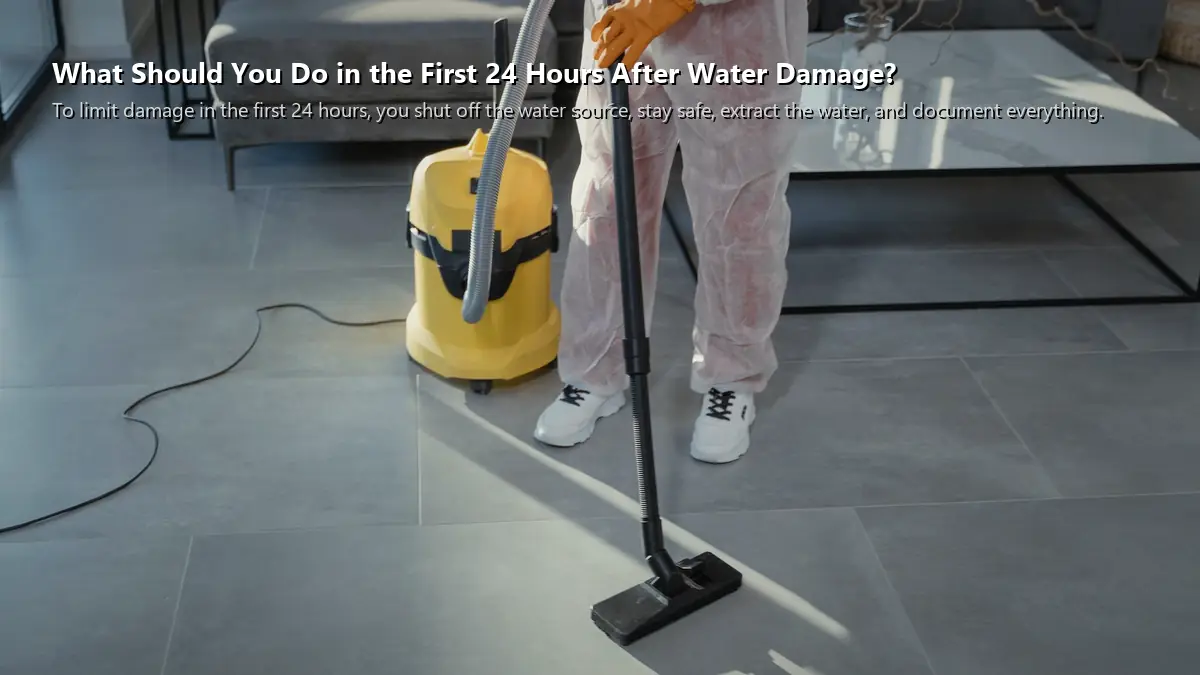
To limit damage in the first 24 hours, you shut off the water source, stay safe, extract the water, and document everything. Follow these steps in order after discovering water in a Kent, WA home:
- Shut off the water at the source or the main.
- Stay clear of standing water near outlets, cords, or the electrical panel.
- Move valuables and furniture to dry ground.
- Call a local water damage restoration company in Kent, WA for extraction and drying.
- Photograph and document all damage for the record.
- Contact the insurance provider to open a claim.
Moving through these steps quickly protects both the structure and the insurance claim, and fast water extraction in Kent, WA is the action that stops the damage from spreading further.
Once the Water Is Out, What Does Water Damage Cost to Fix in a Kent Home?
Once the water is out, the next question is what the repair will cost, which depends on how long the water sat and how much it soaked. Cost drivers include the water category, the affected area, the drying time, and which materials must be replaced, from carpet pad to drywall and subfloor. The structural drying in Kent, WA that follows extraction shapes much of that figure, since longer drying and more saturated materials mean more to restore.
Frequently Asked Questions About Water Damage Emergencies
Does water damage happen immediately?
Yes, water damage starts immediately as porous materials begin absorbing water, even though visible signs can take hours or days to appear. Drywall, carpet, and subfloor soak first, while mold growth begins within 24 to 48 hours (EPA, 2024). The sooner the water is extracted, the more material a restoration crew can save.
Can you live in a house with water damage?
No, you should not stay in a home with contaminated water, active mold, or compromised electrical, though minor, dried, clean-water damage can be livable. The CDC links indoor dampness and mold to respiratory and other health effects, so damp conditions are best cleared before reoccupying affected rooms (CDC, 2024). A local water damage restoration company in Kent, WA can confirm when the structure is dry and safe.
What qualifies as a water emergency?
A water emergency is any water intrusion that is spreading, contaminated, or threatening structure, safety, or health. Restoration companies and insurers treat the threshold as the point where water is no longer contained and dried, which is why an active or hidden leak is handled as urgent even when it looks small.
Will insurance pay for water leak damage?
Yes, most Washington homeowners policies pay for sudden and accidental water leak damage, but not gradual leaks or flooding. The Washington Office of the Insurance Commissioner and the note that frozen-pipe damage depends on keeping the home reasonably heated, while flood damage is excluded and requires separate coverage (Triple-I, 2024). Read the specific policy with the insurer, since coverage varies by cause and terms (Washington OIC, 2024).