Last updated: November 15, 2026
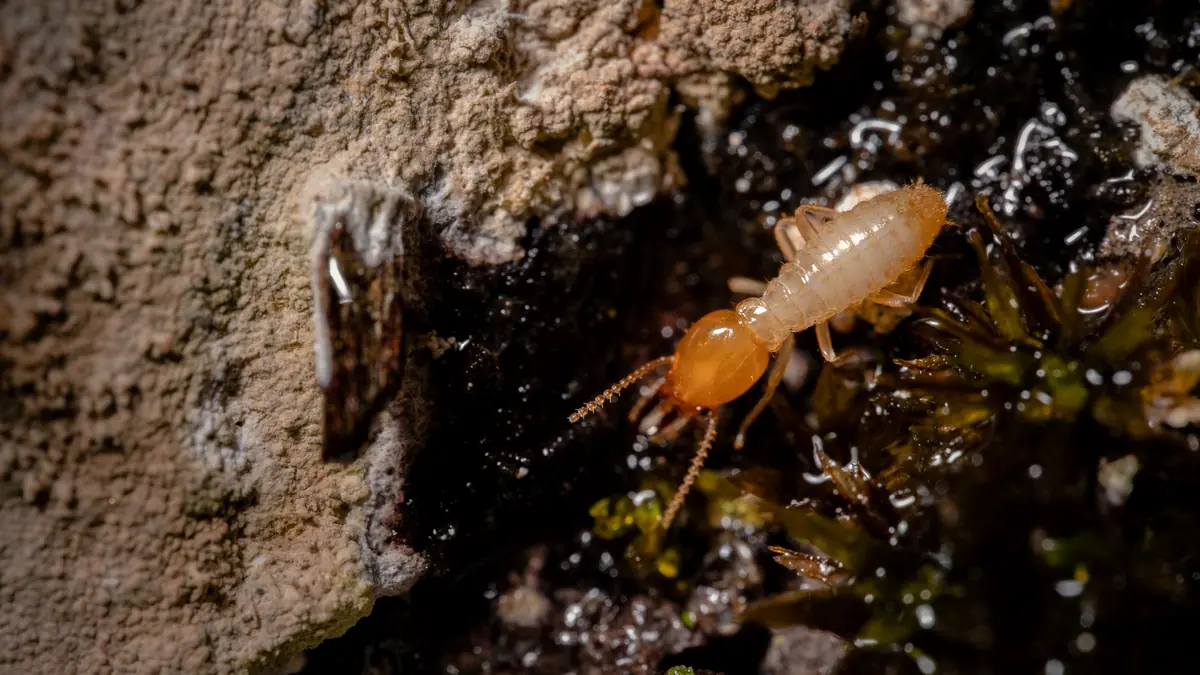
Water damage can cause termites because lingering moisture softens structural wood and raises crawl space humidity to the levels dampwood and subterranean termites seek. Damp wood attracts these insects because softened, rotting cellulose is easy to chew and holds the water a colony needs. Two termite types reach water-damaged wood in Washington: dampwood termites and subterranean termites, and both target the wettest structural wood first, including crawl space joists, sill plates, and foundation framing. Termites can colonize chronically damp wood within weeks to months once the moisture goes unaddressed.
Can Water Damage Cause Termites?
Yes, water damage can cause termites, because standing moisture softens wood and raises humidity into the range dampwood and subterranean termites actively seek. Water does not spawn termites. Chronically wet structural wood becomes both an attractant and an easy food source, pulling colonies toward a home’s frame. In the Pacific Northwest, where damp crawl spaces are common, moisture problems and termite activity often overlap (WSU Extension, 2023).
Why Does Damp Wood Attract Termites?
Damp wood attracts termites because moisture-softened, rotting cellulose is easier to chew and holds the water a colony needs to survive. Dry structural lumber resists tunneling and starves a colony of moisture; wet lumber does the opposite. The conditions damp wood creates for termites are:
- Softened cellulose that insect mandibles penetrate with less effort.
- Higher humidity that keeps a colony from drying out.
- Hidden rot that signals a long-term food supply.
- Cooler shelter inside shaded, enclosed framing.
These conditions build fastest when wet wood sits past the EPA 24-48 hour drying window (EPA, 2023), and elevated wood moisture content sustains them (WSU Extension, 2023). Each condition also shapes which termite type arrives.
What Kinds of Termites Are Drawn to Water-Damaged Wood in Washington?
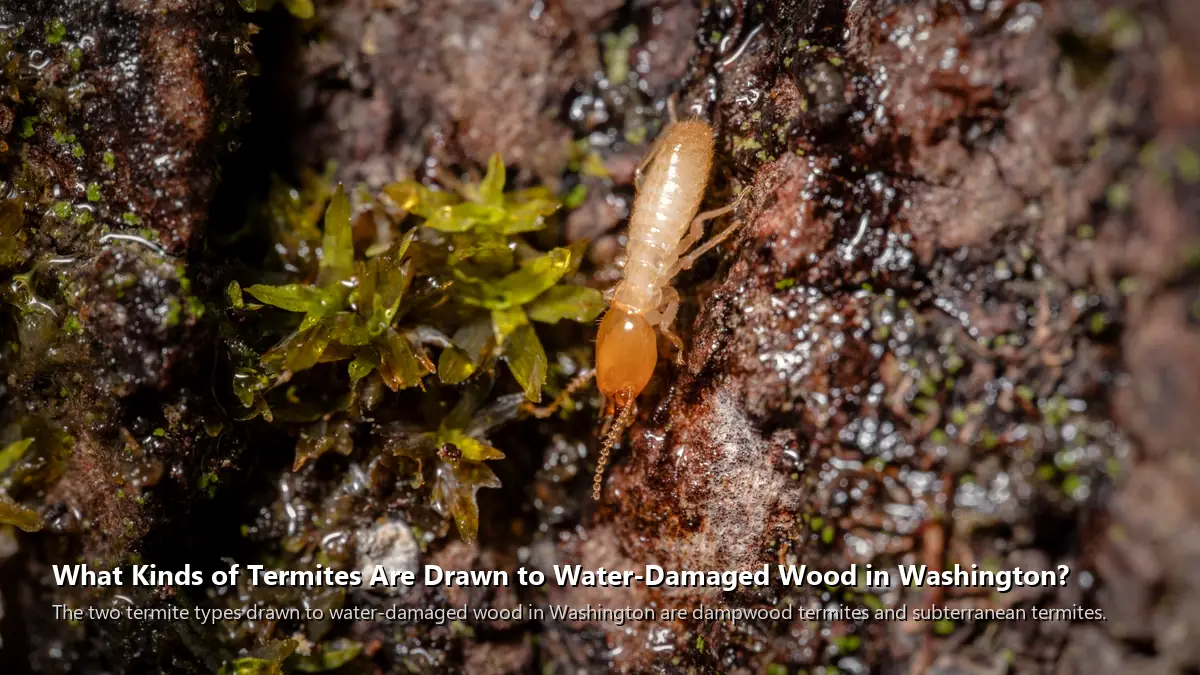
The two termite types drawn to water-damaged wood in Washington are dampwood termites and subterranean termites.
| Termite type | What draws it | Where it nests | Common Kent location |
|---|---|---|---|
| Dampwood termite | Very wet, decaying wood | Inside the damp wood itself | Rotting crawl space joists |
| Subterranean termite | Moist wood with soil contact | Soil below the structure | Sill plates near grade |
| Moisture-driven activity | Standing crawl space humidity | Enclosed damp cavities | Foundation framing |
| Soil-contact activity | Direct wood-to-ground contact | Mud tubes to the nest | Posts and piers |
Dampwood termites are the more common Pacific Northwest species, favoring the saturated wood found in neglected crawl spaces (WSU Extension, 2023). Both types reach the frame through the same wet-wood pathway.
Where Do Termites Show Up After Water Damage in a Kent Home?
Termites show up first in the wettest structural wood, meaning crawl space joists, sill plates, and foundation framing in a Kent home. Water pools and lingers lowest in a structure, so the crawl space takes the damage first. The structural wood most at risk is:
- Crawl space joists holding trapped humidity.
- Sill plates resting close to damp soil.
- Subfloor decking above a wet crawl space.
- Foundation framing in contact with saturated ground.
Most Kent, WA homes sit on crawl spaces, though West Hill split-levels often have basements instead. That housing stock concentrates termite risk in the crawl space below the first floor.
How Fast Do Termites Find Water-Damaged Wood?
Termites can find and colonize chronically damp wood within weeks to months once the moisture goes unaddressed. Speed depends on how long the wood stays wet, not on a single leak or storm. A one-time soak that dries quickly rarely draws a colony.
Drying the structure within the EPA 24-48 hour window removes the attractant before termites establish (EPA, 2023). A restoration crew following the IICRC S500 standard measures moisture to confirm the wood returns to a safe level.
How Do You Tell Termite Damage From Water Damage in a Crawl Space?
The key difference between termite damage and water damage is that termites leave hollow galleries and mud tubes, while water leaves spongy, darkened, square-patterned wood.
| Clue | Termite damage | Water damage |
|---|---|---|
| Sound | Hollow when tapped | Dull and solid |
| Texture | Dry galleries following the grain | Spongy, saturated fibers |
| Surface signs | Mud tubes and tiny exit holes | Peeling paint and staining |
| Discoloration | Clean inner tunnels | Dark, uniform water marks |
The two often occur together, since the moisture that softens wood is the same moisture that invites termites. For a closer side-by-side, read how to tell termite damage from water damage.
What Should You Do if You Find Termites and Water Damage Together?
To handle termites and water damage together, you dry the structure first and schedule a pest inspection, because unaddressed moisture keeps drawing termites back. Structural drying removes the moisture attractant, and a local water damage restoration company handles crawl space water damage drying in Kent. A separate licensed pest professional then treats the colony itself. Any rebuild trade must hold Washington L&I contractor registration under RCW 18.27 (WA L&I, 2024).
Frequently Asked Questions
What Are the First Signs of Termites in Your House?
The first signs of termites in a house are discarded swarmer wings, mud tubes, hollow-sounding wood, and frass near baseboards. These household-wide signs appear beyond the crawl space. The visible early signs are:
- Discarded wings shed by swarmers near windows.
- Mud tubes climbing foundations and walls.
- Hollow wood that sounds empty when tapped.
- Frass pellets piling near baseboards.
Any one of these signs warrants a professional inspection.
What Triggers Termites to Come Out?
Termites come out because warm, humid weather and spring rains trigger winged swarmers to leave the nest and start new colonies. Swarming is reproduction, distinct from the quiet feeding that first draws termites to damp wood. In the Pacific Northwest, mild and wet springs prompt this emergence (WSU Extension, 2023). A swarm indoors signals an established colony nearby.
Can You Ever Really Get Rid of Termites?
Yes, you can get rid of termites, though lasting control requires both professional treatment and fixing the moisture that drew them in. A licensed pest professional treats the active colony. Drying and moisture control on the water-damage side prevent re-infestation by removing the damp wood termites seek.