Water damage and mold damage are two distinct problems: water damage is the moisture event, while mold is the living growth that develops when that moisture sits untreated. You tell them apart by color, texture, and smell. Mold starts within 24 to 48 hours of a surface staying wet, so the water is addressed first, because drying is what stops mold from taking hold. Water drying and mold remediation also cost different amounts, which makes correct identification the step that shapes both the response and the budget for a Kent, WA home.
What Is the Difference Between Water Damage and Mold Damage?
The key difference between water damage and mold damage is that water damage is the moisture event while mold is the living growth that develops after that moisture is left untreated. Water damage is the structural and material harm caused by a burst pipe, a roof leak, a failed appliance, or a flood. Mold is a colony of fungi that needs three things to spread: moisture, an organic food source such as drywall or wood, and time. Water damage happens the moment water contacts a material; mold appears later, as a biological consequence of that water staying in place.
The table below summarizes the five factors that separate the two problems at a glance.
| Factor | Water damage | Mold damage |
|---|---|---|
| Cause | A pipe, roof, appliance, or flood introduces water into a material | Spores land on a wet organic surface and colonize it |
| Appearance/color | Yellow, orange, or brown staining with bubbling or flaking paint | Dark patches of black, green, blue, or white growth |
| Texture | Feels dry, flat, warped, or crusty once it begins drying | Feels slimy, fuzzy, velvety, or powdery to the touch |
| Odor | Often has no detectable smell when fresh | Carries a strong musty, earthy odor |
| Spreads over time | Stays limited to where the water reached | Spreads through a home while moisture remains |
Water damage causes a defined, contained problem, while mold spreads through a home when moisture remains unaddressed. That difference in behavior is why the two are treated as separate stages of the same incident.
How Can You Tell if It’s Mold or Water Damage?
To tell mold from water damage, you check three signals in order: color, texture, and smell. These three signals work together, because no single one is conclusive on its own. A reader can start with color at a distance, confirm with texture up close, and use smell to catch growth that stays hidden behind a surface. The sections below expand each signal so a Kent, WA homeowner can run the check without disturbing a suspected colony.
What Does Water Damage Look Like Compared to Mold?
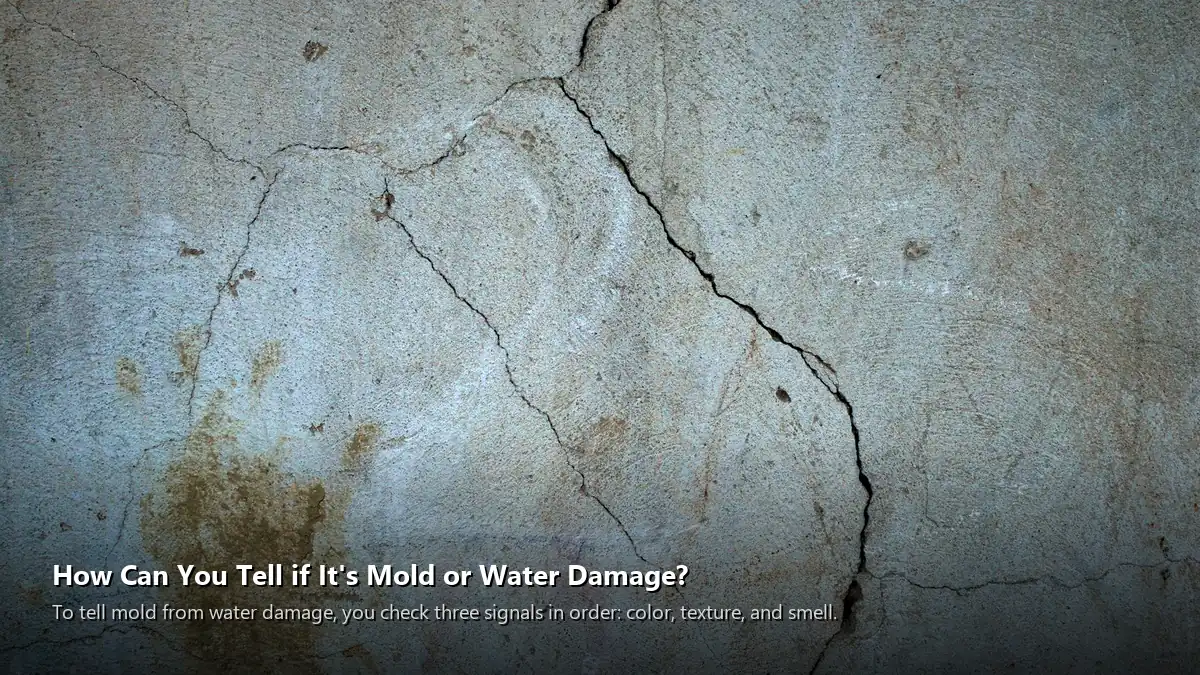
Water damage looks like yellow, orange, or brown staining with bubbling or flaking paint, while mold appears in darker patches of black, green, blue, or white. The color distinction is the most reliable first visual check on general surfaces such as drywall, ceilings, and painted walls. Water damage produces a flat discoloration that follows the path the water traveled, often with a defined edge or a tide line. Mold produces a cluster of spots or a creeping patch that grows outward from a damp point. Visible spread also differs: a water stain holds its shape over days, while a mold patch enlarges as the colony matures.
Does Water Damage Smell Different From Mold?
Yes, mold carries a strong musty, earthy odor, while fresh water damage often has no detectable smell at all. A musty smell with no visible mark frequently signals hidden mold behind drywall or under flooring, where the growth stays out of sight but releases odor into the room. The EPA names a musty odor as a common indicator of hidden mold growth, so a persistent smell warrants a closer look even when a surface appears clean (EPA, 2024). Fresh water damage, by contrast, announces itself visually before it smells, which is why a dry-looking but musty area often points to an older, developing problem rather than a new leak.
How Does the Texture of Mold Differ From a Water Stain?
To tell them apart by texture, you touch the area: a water stain feels dry, flat, or crusty, while mold feels slimy, fuzzy, or powdery. Water damage can warp, swell, or soften a material without any growth, leaving a surface that is distorted but still inert. A raised fuzzy, velvety, or powdery texture confirms active mold, because that surface is a living colony rather than a residue. Keep this check to light visual and surface inspection only. Do not scrub, cut into, or disturb a suspected dark colony, since disturbing growth releases spores into the air a resident breathes.
How Quickly Does Water Damage Turn Into Mold?
Water damage turns into mold within 24 to 48 hours, because mold spores need only moisture, warmth, and an organic surface to begin growing. The EPA advises drying wet or damp materials within 24 to 48 hours to prevent mold from taking hold (EPA, 2024). In Kent, WA and the wider Puget Sound region, cool and damp conditions with high indoor humidity shorten that already narrow margin, so a saturated material rarely self-dries inside the window on its own. A wet subfloor in a Kent crawl space or a soaked wall cavity can hold moisture for days when outdoor air stays humid, which keeps the surface in the mold-growth zone far longer than the calendar suggests. This timeline is why the speed of drying, not the water itself, decides whether mold follows a leak or a flood.
Which Problem Should You Address First, the Water or the Mold?
The first problem to address is the water, because mold cannot be fully removed while the moisture that feeds it remains. Remediating mold on top of a still-wet structure only invites regrowth, since the colony returns as soon as the surface rehydrates. The correct order of response follows five steps.
- Stop the water source so no new moisture enters the structure.
- Extract standing water from floors, carpets, and cavities before it migrates further.
- Dry the structure with equipment, following structural drying in Kent, WA methods that pull moisture from materials, not just surfaces.
- Assess for mold once the structure reads dry on a moisture meter.
- Remediate any confirmed mold after drying removes the condition that feeds it.
This sequence reflects IICRC S500, the standard restoration companies follow for the order and method of structural drying. Working the steps in order turns a water event into a dried, verified structure before mold is ever assessed, which also keeps the cost of the next stage predictable.
How Much Does It Cost to Fix Water Damage vs Mold Damage?
Water damage repair and mold remediation cost different amounts, because drying a wet structure is a smaller job than removing established mold colonies. Drying addresses moisture with equipment and monitoring, while remediation adds containment, removal of affected material, and air treatment. The ranges below describe scope, not a quote, and every figure shifts with the materials involved and how far the moisture traveled.
| Scope | Water damage drying | Mold remediation |
|---|---|---|
| Small, single room | $500-$1,500 in most homes | $1,000-$3,000 in most homes |
| Multiple rooms | $1,500-$4,000 in most homes | $3,000-$6,000 in most homes |
| With material replacement | $3,000-$7,000 in most homes | $5,000-$10,000 in most homes |
| With hidden-cavity work | $4,000-$9,000 in most homes | $6,000-$15,000 in most homes |
Exact figures depend on an in-person inspection, because moisture mapping, affected square footage, and the materials in question all move the number. Final pricing for a Kent, WA property comes after a restoration company assesses the extent of the damage, measures moisture in the structure, and confirms whether mold is present. A problem caught and dried inside the 24-to-48-hour window usually stays in the lower drying range and avoids the remediation column entirely.
Is the Mold After Water Damage the Dangerous Black Kind?
Not all mold after water damage is the dangerous black kind, though water-soaked drywall left wet is exactly where toxigenic mold can take hold. Color alone does not confirm Stachybotrys, the species often called black mold, because several harmless and common molds also appear dark. Laboratory testing is what identifies the species; a visual guess cannot. The health concern depends on exposure rather than appearance, and the CDC states that any indoor mold should be removed regardless of its type or color (CDC, 2024). Because the fastest way to keep that mold from establishing is prompt drying, keeping a wall cavity dry through professional structural drying in Kent, WA is the step that denies any mold species the moisture it needs. For a closer look at whether the growth that follows a leak is the toxic kind, the next question to resolve is how to identify black mold from water damage.
Does Water Damage Always Lead to Mold Growth?
No, water damage does not always lead to mold, because mold only grows when the material stays wet past the 24-to-48-hour drying window. Fast, thorough drying is what breaks the water-to-mold chain, removing the one condition the colony cannot survive without. Homes dried inside the EPA window often avoid mold entirely, even after a significant leak, because the spores never get the sustained moisture they require. A detailed explanation of why drying speed decides whether mold grows shows how the timeline, not the volume of water, determines the outcome. The practical takeaway for a Kent, WA home is that the response time after a leak matters more than the size of the leak itself.
Frequently Asked Questions About Water Damage and Mold
Does Homeowners Insurance Treat Water Damage and Mold Differently?
Yes, most policies cover sudden water damage but limit or exclude mold, especially mold traced to a slow leak or delayed cleanup. The Washington Office of the Insurance Commissioner and the Insurance Information Institute both draw the line between sudden-and-accidental damage, which is often covered, and gradual damage, which often is not (WA OIC, 2024; Triple-I, 2024). Coverage depends on the specific policy and cause, so no outcome is promised here. A homeowner can check how a claim applies to a residential water damage property with the insurer before work begins.
What Are the First Signs of Mold Sickness?
The first signs people report from mold exposure are coughing, congestion, and eye or throat irritation, according to the CDC. Reactions vary widely by individual, and some people notice no symptoms at all. The CDC notes that the evidence linking indoor mold to specific health effects is limited, so these reports are not a diagnosis (CDC, 2024). This answer makes no medical claim and recommends a licensed clinician for any health concern.
How Do You Tell Water Damage From Mold on Wood?
To tell water damage from mold on wood, you look for dark staining and warping versus raised fuzzy or powdery patches that wipe up with residue. Discolored but firm wood is likely stained from past moisture, while soft or spotted wood points to rot or active mold. This wood-specific check matters for framing, subfloor, and trim in Kent, WA crawl spaces, where damp conditions reach structural timber. A patch that smears or leaves a mark on a cloth signals growth rather than a dried stain.
Can Mold Grow Without Any Water Damage?
Yes, mold can grow without obvious water damage wherever humidity stays high enough, such as a poorly ventilated bathroom or a damp Puget Sound crawl space. The EPA recommends keeping indoor humidity below 60% to limit mold, which means condensation alone can feed growth with no flood or leak involved (EPA, 2024). Bathrooms, laundry areas, and unvented crawl spaces are common sites because they trap moisture in the air. Controlling humidity and ventilation keeps these areas below the threshold that mold needs.