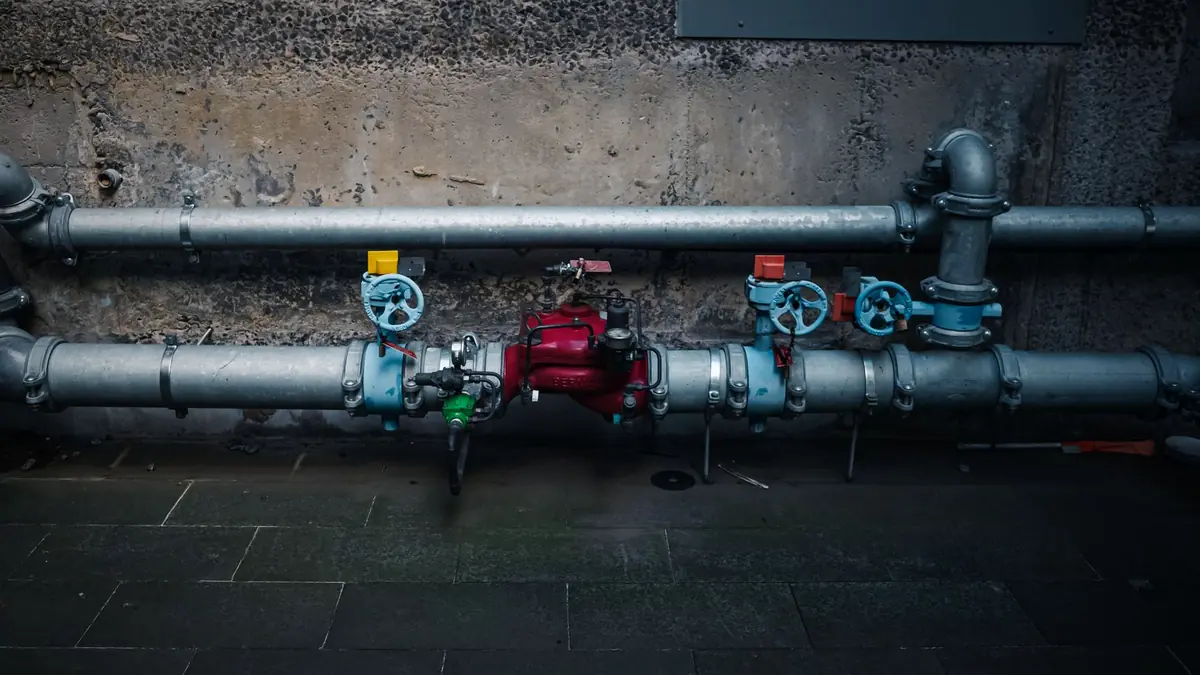
Knowing what to do if a water heater is leaking starts with three moves: shut off the water supply, cut the power or gas, and drain the tank if help is delayed. Where the unit leaks points to the cause, since a bottom leak signals internal tank corrosion, a top leak points to the inlet or outlet connections, and a valve drip traces to the pressure relief valve. Cleanup then means containing and documenting the water before extracting and drying the area within 24 to 48 hours. A leaking water heater should be taken out of use because the leak worsens and raises electrical and scalding risks, and a steady or spreading leak needs attention right away.
What Should You Do First When a Water Heater Is Leaking?
To stop a leaking water heater, you shut off the water supply first, then cut the power or gas before touching the tank. Acting in order limits how much water reaches flooring, walls, and nearby electrical components. Many Kent, WA water heaters sit in an attached garage or utility closet, where a leak spreads quickly into adjacent carpeted rooms. The first steps when a water heater is leaking are to shut off the water, cut the power or gas, and drain the tank.
- Shut off the cold water inlet valve on top of the tank, or the home’s main shut-off if the unit has no dedicated valve.
- Turn off the circuit breaker on an electric unit, or set the gas control valve to OFF on a gas unit.
- Drain the tank through the bottom drain valve when professional help is delayed and the tank stays full.
- Place towels, a bucket, or a wet vac at the base to catch active drips and keep water off the floor.
Finding the source of the leak comes next, once the water and power are safely off.
How Do You Shut Off the Water Supply to a Water Heater?
To shut off the water, you close the cold water inlet valve on top of the tank by turning it fully clockwise. If the heater has no dedicated shut-off, close the home’s main water valve instead, usually where the supply line enters the house. Stopping the inflow keeps the tank from refilling as it drains.
How Do You Turn Off the Power or Gas to a Water Heater?
To cut the power, you switch off the water heater’s circuit breaker on an electric unit, or turn the gas control valve to OFF on a gas unit. An electric unit loses power at the breaker panel, while a gas unit shuts down at the control valve on the tank body. Standing water around energized electrical parts is a shock hazard, so the breaker goes off before anyone steps near the puddle (CPSC, 2023).
How Do You Drain a Leaking Water Heater Tank?
To drain the tank, you connect a garden hose to the drain valve at the bottom and run it to a floor drain or outside. This step matters only when professional help is delayed and the tank is still full of water. Opening a hot tap upstairs lets air in so the tank empties faster.
Where Is Your Water Heater Leaking From?
Where a water heater leaks from tells you whether the unit can be repaired or needs replacing. A connection or valve leak is often a straightforward fix, while a tank-body leak points to the end of the unit’s service life. A conventional storage water heater lasts about 10 to 15 years, so age-related corrosion becomes common once a tank passes the decade mark (DOE, 2024).
| Leak location | Likely cause | Repairable or replace |
|---|---|---|
| Bottom of the tank | Internal tank corrosion | Replace |
| Top connections | Loose cold water inlet or hot water outlet fitting | Repairable |
| Pressure relief valve | Excess temperature or pressure, faulty T&P valve | Repairable |
| Drain valve | Loose or worn drain valve | Repairable |
What Does a Leak From the Bottom of the Tank Mean?
A leak from the bottom of the tank usually means the inner tank has corroded through, which cannot be repaired. Rule out condensation first, since cold inlet water can bead on a warm tank and drip without any real failure. Once corrosion opens the steel tank, water seeps from the base and the unit needs replacing.
What Does a Leak From the Top of the Tank Mean?
A leak from the top of the tank usually means a loose cold water inlet or hot water outlet connection, which is often repairable. The cold inlet fitting feeds water in, and the hot outlet fitting carries heated water out, so a drip at either threaded joint traces to that connection. Tightening or resealing the fitting usually stops a top leak.
Why Does Water Drip From the Pressure Relief Valve or Overflow Pipe?
Water drips from the pressure relief valve because the tank’s temperature or pressure is too high, and the T&P valve is releasing it as a safety measure. Thermal expansion raises pressure as water heats, and the valve vents through the overflow pipe to protect the tank. A constant drip means the T&P valve or an expansion tank needs attention, not a drip to leave alone (CPSC, 2023).
How Do You Clean Up the Water After a Water Heater Leak?
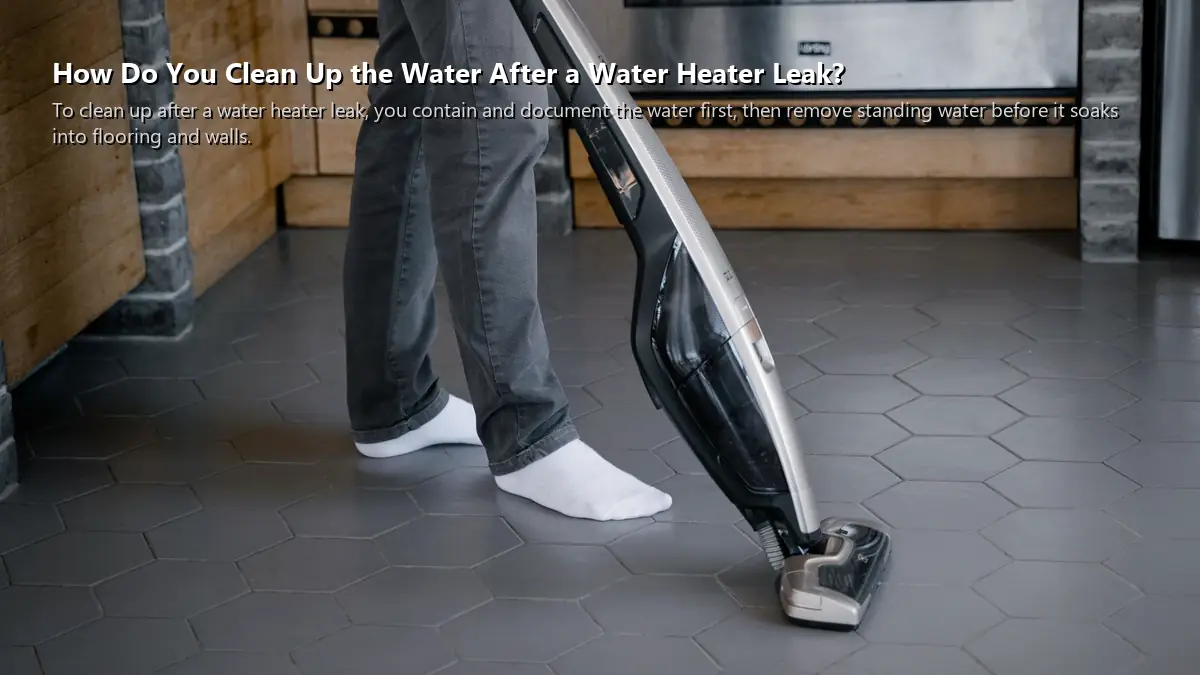
To clean up after a water heater leak, you contain and document the water first, then remove standing water before it soaks into flooring and walls. Photos of the damage support an insurance claim, and fast extraction limits how far moisture travels across a Kent, WA home. The cleanup steps after a water heater leak are to contain the water, document the damage, remove standing water, and dry the area.
- Contain the spread with towels, a mop, or a wet vac so water stops migrating across the floor.
- Document the damage with photos and notes before anything is moved or cleaned.
- Remove standing water with a wet vac, pulling it away from baseboards and flooring seams.
- Dry the area within 24 to 48 hours, the window the EPA sets before mold begins to grow on wet materials (EPA, 2024).
A local water damage restoration company follows the IICRC S500 standard for extraction and structural drying, using commercial air movers and dehumidifiers that a household wet vac cannot reach. Professional water heater leak cleanup in Kent, WA pulls trapped water from the structure and dries it to the 24 to 48 hour target.
How Do You Remove Standing Water and Dry a Soaked Carpet?
To remove standing water, you extract it with a wet vac and lift soaked carpet off the pad so the subfloor can dry. Many water heaters sit in garages or closets next to carpeted rooms, so a soaked carpet is the common next job after a leak. Trapped moisture under carpet and pad holds against the subfloor past the 24 to 48 hour window, which is why wet carpet drying in Kent, WA uses professional drying equipment rather than household fans.
Can You Still Use a Water Heater While It Is Leaking?
No, you should take a leaking water heater out of service because the leak only worsens and standing water near an electric or gas unit is a safety hazard. Running the unit keeps pressurized water flowing to a tank that is already failing, which pushes more water onto the floor. Standing water around electrical connections or a gas burner raises shock and fire risks, so the unit stays off until it is repaired or replaced (CPSC, 2023).
Is a Leaking Water Heater an Emergency That Needs Attention Now?
A leaking water heater is an emergency when the leak is steady, spreading, or reaching electrical or gas components, while a slow drip can wait a short while. A minor valve drip into a pan gives time to plan a repair, while water pooling across a floor or creeping toward an outlet calls for immediate shut-off and extraction. The difference between a minor drip and an urgent flood is covered in whether a leaking water heater is an emergency.
How Serious Is a Leaking Water Heater Over Time?
A leaking water heater becomes progressively more serious the longer it runs, moving from a slow drip to a full tank failure. Each day of leaking adds moisture to flooring, framing, and stored items near the unit. A leaking water heater grows more serious in three ways over time.
- Water damage spreads into subfloor, drywall, and baseboards as moisture wicks outward from the tank.
- Mold growth begins on damp materials once they stay wet beyond 24 to 48 hours (EPA, 2024).
- Tank failure follows corrosion, ending in a sudden release of the tank’s full volume onto the floor.
Each risk compounds the one before it, so an early response limits both the repair bill and the water damage.
How Long Will a Water Heater Last Once It Starts Leaking?
Once a tank starts leaking from the bottom, a water heater rarely lasts more than a short period before it fails completely. Corrosion-driven leaks only widen as the steel tank keeps thinning, so the drip rarely reverses. Against an average service life of 10 to 15 years, a bottom leak signals the tank has reached its end (DOE, 2024).
Will a Leaking Water Heater Explode?
No, a leaking water heater will almost never explode from a leak alone, because explosions come from a failed pressure relief valve combined with excess pressure, not from a slow drip. The rare risk comes from a blocked or faulty T&P valve that cannot vent rising pressure. A working pressure relief valve releases that pressure safely, which is why a dripping T&P valve is checked rather than ignored (CPSC, 2023).
Frequently Asked Questions About a Leaking Water Heater
Can You Take a Shower if Your Water Heater Is Leaking?
Yes, you can usually take a shower while a water heater is leaking, but only briefly and only if the power or gas is already shut off and the leak is small. The hot water supply drops once the unit is off, so the remaining hot water in the tank runs out quickly. A large or spreading leak means skipping the shower until the unit is handled.
What to Do if a Water Heater Is Leaking From the Bottom?
If a water heater is leaking from the bottom, you shut off the water and power, drain the tank, and plan for a replacement because a corroded tank cannot be repaired. Move stored items away from the base and extract any standing water before it reaches the subfloor. A bottom leak points to tank failure, so replacement is the path forward.
What Should You Do if an Electric Water Heater Is Leaking?
If an electric water heater is leaking, you switch off its circuit breaker before touching anything near the unit because standing water around electrical components is a shock hazard (CPSC, 2023). Shut off the cold water inlet next, then remove standing water with a wet vac. Keep the breaker off until the leak is repaired or the unit is replaced.