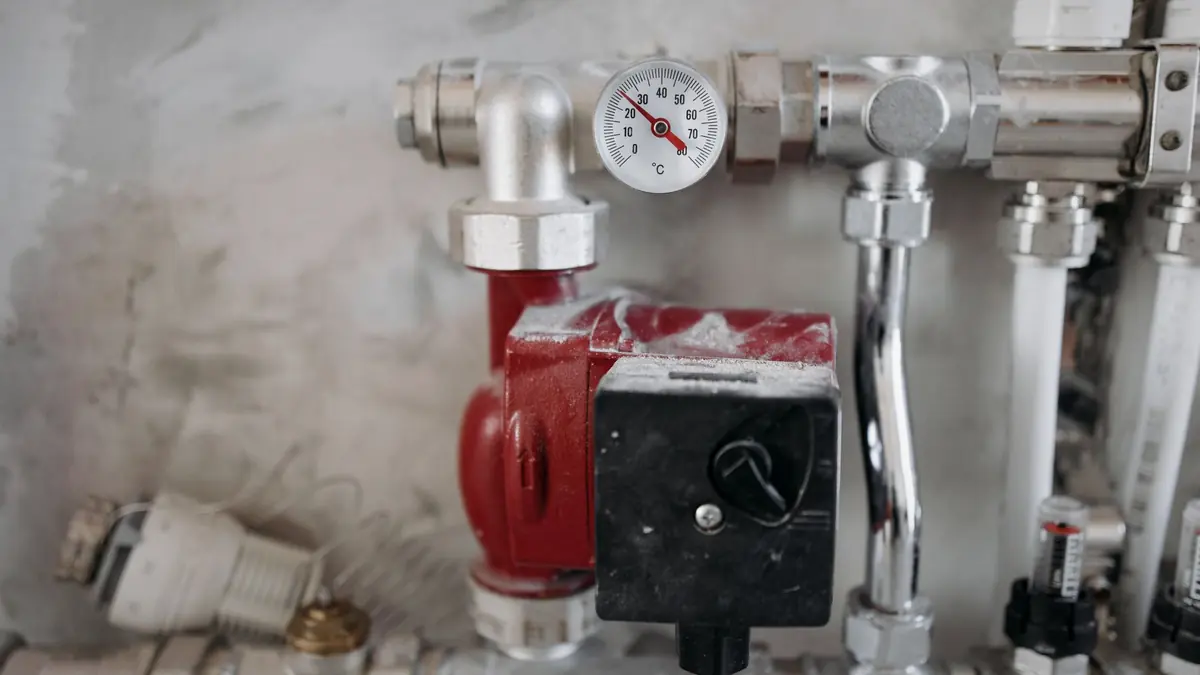
A leaking water heater is not an emergency in every case, but a fast-spreading leak, a burst tank, or a gas leak always crosses that line. The leaks that count as an emergency are a burst tank, a leaking gas connection, water reaching electrical wiring, and any leak flooding faster than the drain pan holds, because a failed 40-to-50-gallon tank empties within minutes and keeps refilling until the supply is shut off. A gas leak adds the most urgency through a rotten-egg smell, though a leaking tank itself rarely explodes.
Is a Leaking Water Heater Always an Emergency?
No, a leaking water heater is not always an emergency, but several situations turn it into one within minutes. A minor leak, such as a slow drip into the drain pan, a loose connection, or condensation on a cold tank, collects slowly and stays contained. An emergency leak behaves differently: a burst tank floods a room, the water spreads across the floor, or a rotten-egg odor signals escaping gas. The difference is speed and spread, not the simple fact that water appears.
Which Water Heater Leaks Count as an Emergency?
The four leaks that count as a water heater emergency are a burst tank, a leaking gas line, water reaching electrical wiring, and a leak flooding faster than the drain pan can hold. Each one calls for a fast first action rather than a wait-and-watch approach. The table below matches each leak to its urgency and the single step that limits the damage until help arrives.
| Leak type | Emergency? | Why it matters | First action |
|---|---|---|---|
| Burst tank | Yes | Releases the full tank and keeps refilling | Shut off cold-water supply |
| Gas connection or odor | Yes | Escaping gas can ignite | Shut off gas, leave the home |
| Water near electrical or the burner | Yes | Standing water meets live current | Cut power to the unit |
| Slow drip into the drain pan | No | Contained by the pan | Monitor and schedule service |
When a burst tank or a fast leak soaks flooring and framing, the standing water needs professional extraction and drying; water heater leak cleanup in Kent, WA covers that recovery work.
How Fast Can a Leaking Water Heater Flood a Home?
To flood a home, a failed water heater tank empties its full 40-to-50-gallon contents within minutes and keeps refilling until the cold-water supply is shut off. A small drip releases a cup at a time, but a ruptured tank releases everything the inlet line feeds it, so the water keeps coming until someone closes the valve. Standing water then migrates toward the lowest point. Most Kent, WA homes sit over crawl spaces, so the water drops through the subfloor and soaks framing and insulation below. The EPA recommends drying wet materials within 24-48 hours to limit mold growth (EPA, 2024).
Is a Gas Water Heater Leak More Urgent Than an Electric One?
The key difference between a gas and an electric water heater leak is that a gas unit adds a leaking-gas risk that calls for shutting off the gas and leaving the home. Both types share water and electrical hazards once a leak reaches the floor. The table separates the two by risk so the right first move is clear. The CPSC links hot tap water at 140 degrees Fahrenheit to third-degree burns in about five seconds, which makes the scald risk real for either unit (CPSC, 2023).
| Risk | Gas water heater | Electric water heater | What to do |
|---|---|---|---|
| Ignition from a gas smell | Present | Absent | Shut off the gas supply |
| Pilot light near a leak | Present | Absent | Set the gas knob to off |
| Electrical shock in standing water | Present | Present | Cut power at the breaker |
| Scalding from hot water | Present | Present | Avoid the hot discharge |
A full gas shut-off has more steps than this table shows, so the dedicated first-steps guide walks through them in order.
Will a Leaking Water Heater Explode?
No, a leaking water heater rarely explodes, though a failed temperature and pressure relief (T&P) valve combined with overheating can rupture the tank. The T&P valve releases water when temperature or pressure climbs past a safe limit, which protects the tank. A leak usually relieves pressure on its own rather than building it, so an active leak is a drainage problem more than a blast risk. A rupture happens only when the safety valve fails and the thermostat keeps heating. The U.S. Department of Energy lists the relief valve as a core safety feature on storage tanks (DOE, 2024).
How Dangerous Is a Leaking Water Heater Once You Know It Is Leaking?
Once you confirm the unit is leaking, the next question is how dangerous the leak is to the people in the home. Classifying the urgency, the focus of this article, and understanding the specific hazards are two linked steps. Scalding water, gas exposure, and electrical shock each carry their own risk; how dangerous a leaking water heater is covers those hazards in detail.
Frequently Asked Questions About Water Heater Leaks
What should you do if a water heater is leaking from the bottom?
To handle a water heater leaking from the bottom, you shut off the water supply and the power or gas, because bottom leaks usually mean tank corrosion that will not stop. A bottom leak points to internal tank failure rather than a fixable fitting. A corroded tank generally needs replacement, not repair.
What should you do if a water heater is leaking from the top?
To handle a water heater leaking from the top, you close the cold-water inlet valve first, since top leaks often come from the inlet or outlet connections rather than the tank itself. Fittings and valves at the top can sometimes be tightened or replaced, unlike a failed tank. That makes a top leak less likely to require a full replacement than a bottom leak.
How do you turn off a gas water heater that is leaking?
To turn off a leaking gas water heater, you set the gas control knob to OFF and close the gas shut-off valve on the supply line, then close the cold-water valve. This order stops the burner before it isolates the tank. The shut-off steps for a leaking water heater guide covers the full procedure.
Can you still use water in the house if the water heater is leaking?
Yes, you can still use cold water with a leaking water heater once its supply is shut off, but you lose hot water until the unit is repaired or replaced. Closing the heater's inlet valve isolates the tank from the rest of the plumbing. Cold taps, toilets, and outdoor spigots keep working normally.