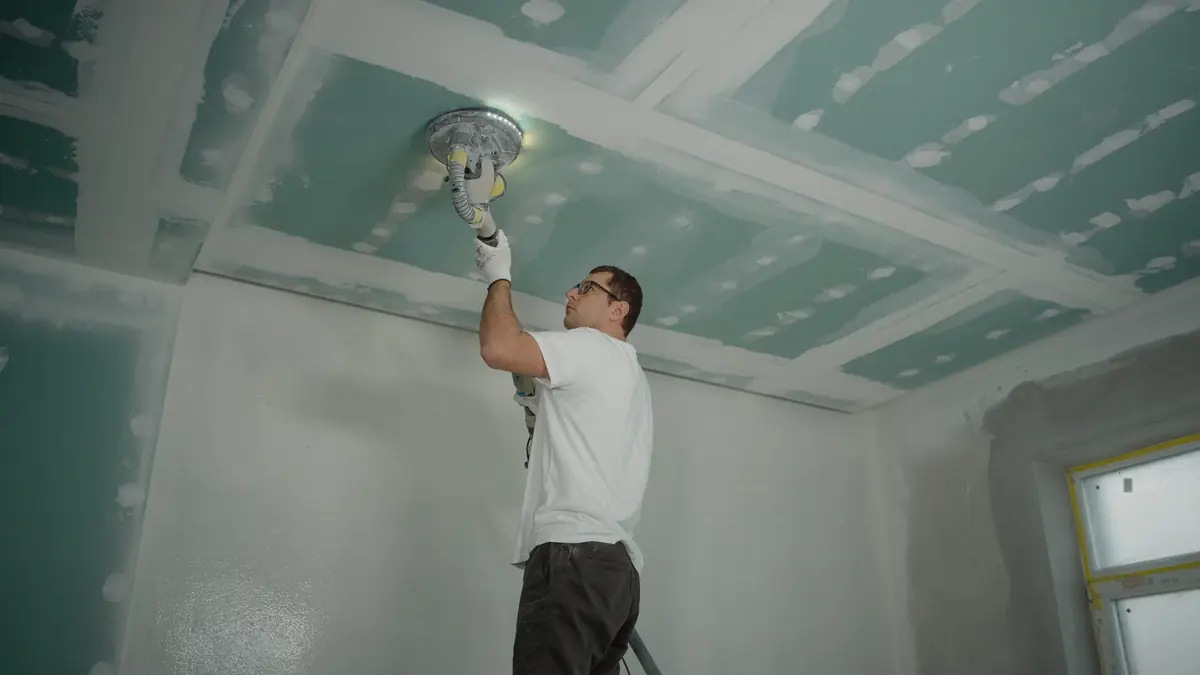
A water-damaged ceiling will dry out on its own only after a small, fully stopped leak, when little water soaked into the drywall above. Full drying then takes three days to several weeks, set by the ceiling material and how much water entered. Drying works by stopping the leak, increasing airflow, lowering humidity, and opening the cavity above the drywall. A ceiling that sags, crumbles, or stays wet past two days usually needs replacement rather than drying, and water trapped deep in the cavity needs professional structural drying to clear.
Will a Wet Ceiling Dry Out on Its Own?
Sometimes a wet ceiling dries out on its own, but only when the leak has stopped and little water soaked into the drywall. A stopped leak lets a ceiling dry; a continuing leak never does, because fresh water keeps resaturating the board. The amount of water and how long it sat decide the outcome more than anything else.
A thin, paint-depth stain from a brief drip often clears with airflow in a few days. A ceiling soaked for hours holds water in the drywall core, the insulation, and the joists, where surface air never reaches. Past the EPA 24-48 hour window, that trapped moisture starts to feed mold (EPA, 2024).
What Decides Whether a Ceiling Dries on Its Own?
The four factors that decide whether a ceiling dries on its own are the water volume, the ceiling material, the airflow, and how long it stayed wet. Each factor shifts the ceiling toward drying or toward replacement:
- Water volume: a few drops dry, while a saturated sheet of drywall often does not.
- Ceiling material: painted drywall releases water faster than dense plaster or popcorn texture.
- Airflow and humidity: moving, dry air pulls moisture out, while still, humid air holds it in.
- Time wet: drywall wet under 24 hours often recovers, while days-long saturation rarely does.
Those same four factors also set how long the ceiling takes to dry.
How Long Does a Water-Damaged Ceiling Take to Dry Out?
To dry fully, a water-damaged ceiling takes three days to several weeks, depending on the material and the amount of water. Minor surface dampness with good airflow can clear in two to four days. A soaked ceiling, or a dense material like plaster, can hold moisture for two to four weeks. The EPA advises drying any wet building material within 24-48 hours to limit mold, so days-long drying means mold prevention has already become part of the job (EPA, 2024).
| Ceiling material | Minor dampness | Soaked through |
|---|---|---|
| Drywall (painted) | 2-4 days | 1-3 weeks |
| Textured/popcorn drywall | 3-5 days | 2-4 weeks |
| Plaster | 4-7 days | 2-4 weeks |
| Lath-and-plaster | 5-10 days | 3-6 weeks |
These ranges assume fans and a dehumidifier run continuously; without them, drying stalls.
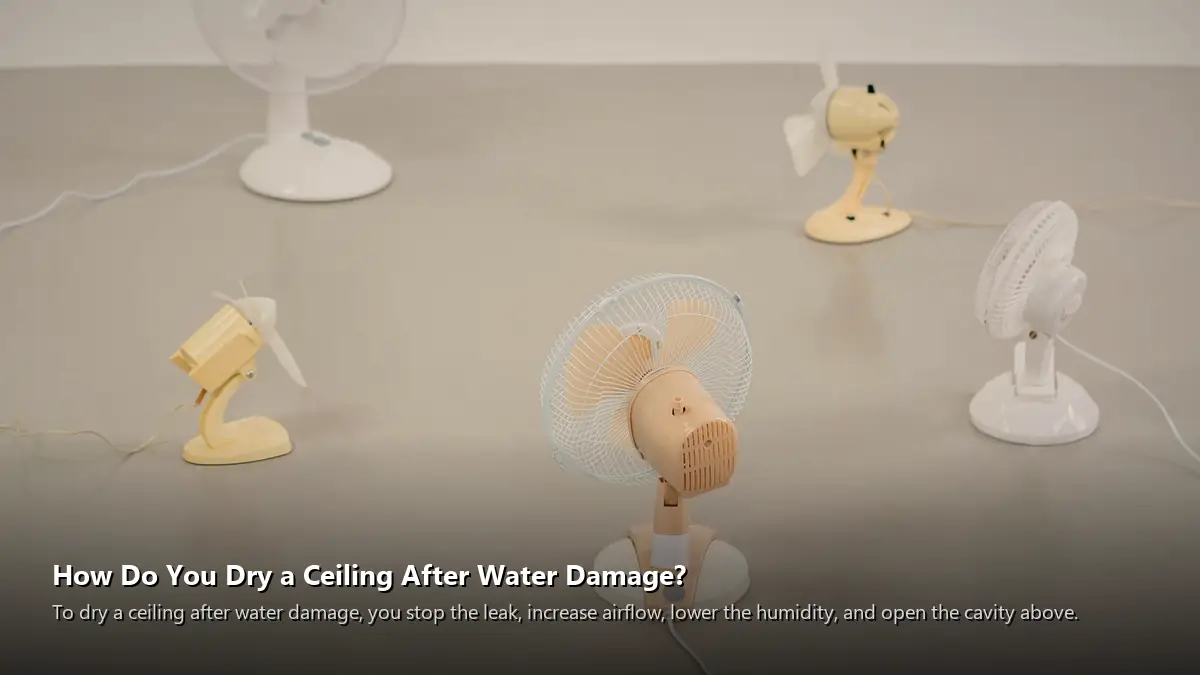
How Do You Dry a Ceiling After Water Damage?
To dry a ceiling after water damage, you stop the leak, increase airflow, lower the humidity, and open the cavity above. Work the steps in order, because drying before the leak stops only wastes effort:
- Stop the water source at the pipe, roof, or fixture feeding the leak.
- Increase airflow with box fans aimed across the ceiling, not just at the floor.
- Lower humidity with a dehumidifier running in the same closed room.
- Open or weep the cavity by pulling a small section or lancing a bulge to drain trapped water.
- Check moisture with a meter before closing up, and do not patch until the reading shows fully dry.
Restoration companies follow the IICRC S500 standard, which sets drying before any repair begins. A moisture meter, not a dry-looking surface, confirms the ceiling is ready for ceiling water damage repair in Kent, WA.
How Do You Speed Up Ceiling Drying?
To speed up ceiling drying, you run a dehumidifier alongside box fans and hold the room at a steady, warm temperature. Fans alone move air, but the air quickly saturates in a closed room and stops absorbing water. A dehumidifier lowers relative humidity so each pass of air pulls more moisture from the drywall, and warm air carries more water vapor than cold air, which is why steady heat shortens drying.
Does a Water-Damaged Ceiling Need to Be Replaced?
No, a water-damaged ceiling does not always need replacing, but a ceiling that sags, crumbles, or stays wet past 48 hours usually does. Minor staining on otherwise sound drywall can be dried, sealed, and repainted. The signs that point to replacement instead of repair are structural:
- Visible sagging or bowing of the drywall under the water’s weight.
- Crumbling or soft drywall that gives way under light pressure.
- Spreading water stain that keeps widening after the leak is fixed.
- Mold growth in the cavity, which the EPA links to drywall that stayed wet (EPA, 2024).
A ceiling caught early and dried within the EPA window can usually be saved and repainted rather than torn out.
When Won’t a Wet Ceiling Dry Without Professional Equipment?
A wet ceiling won’t dry without professional equipment when water is trapped in the cavity above the drywall, where household fans cannot reach. Moisture held in the joists, insulation, and cavity sits past the EPA 24-48 hour window and feeds mold, even while the painted surface below looks dry (EPA, 2024). Professional structural drying places air movers and dehumidifiers to pull water from the whole cavity, not just the visible surface, and a moisture meter verifies the hidden framing is dry. When a ceiling stays damp past two days, the number on this page reaches a local water damage restoration company for professional structural drying.
Frequently Asked Questions About Drying a Water-Damaged Ceiling
How Can I Repair a Ceiling After It Has Been Water Damaged?
To repair a water-damaged ceiling, you confirm it is fully dry with a moisture meter, then scrape, seal, patch, and repaint. Drying must come first, because sealing moisture inside the ceiling traps mold and the repair fails within weeks. After a dry reading, scrape loose material, apply a stain-blocking sealer, patch any opened section, and repaint. Confirm the leak source and any coverage before starting ceiling water damage repair in Kent, WA.
Will the Water Stain Disappear After the Ceiling Dries?
No, a water stain does not disappear after the ceiling dries; the discoloured mineral deposit stays until it is sealed and painted over. The brown or yellow ring is dried mineral residue, not active moisture, so it remains visible even on a fully dry ceiling. A stain that keeps returning after painting means the leak was never fully fixed and water is still entering. Tracing what causes ceiling leaks finds the real source before resealing.
How Long Before a Wet Ceiling Could Collapse?
A wet ceiling can begin to sag within hours and collapse within one to two days once the drywall is saturated. Soaked drywall loses rigidity fast, and pooled water adds weight that pulls a bulging section down. Stay out from under any bulging or sagging ceiling, because the failure gives little warning. This is a range, not a fixed timeline, and heavy saturation fails faster than a slow drip.
Is a Wet Ceiling Still Dangerous After It Looks Dry?
Yes, a ceiling that looks dry can still be dangerous because moisture often stays trapped in the cavity and insulation above the drywall. Hidden dampness in the cavity feeds mold that the CDC links to indoor air quality problems, even when the surface reads dry (CDC, 2024). A moisture meter in the framing, not a glance at the paint, confirms whether the ceiling is safe.