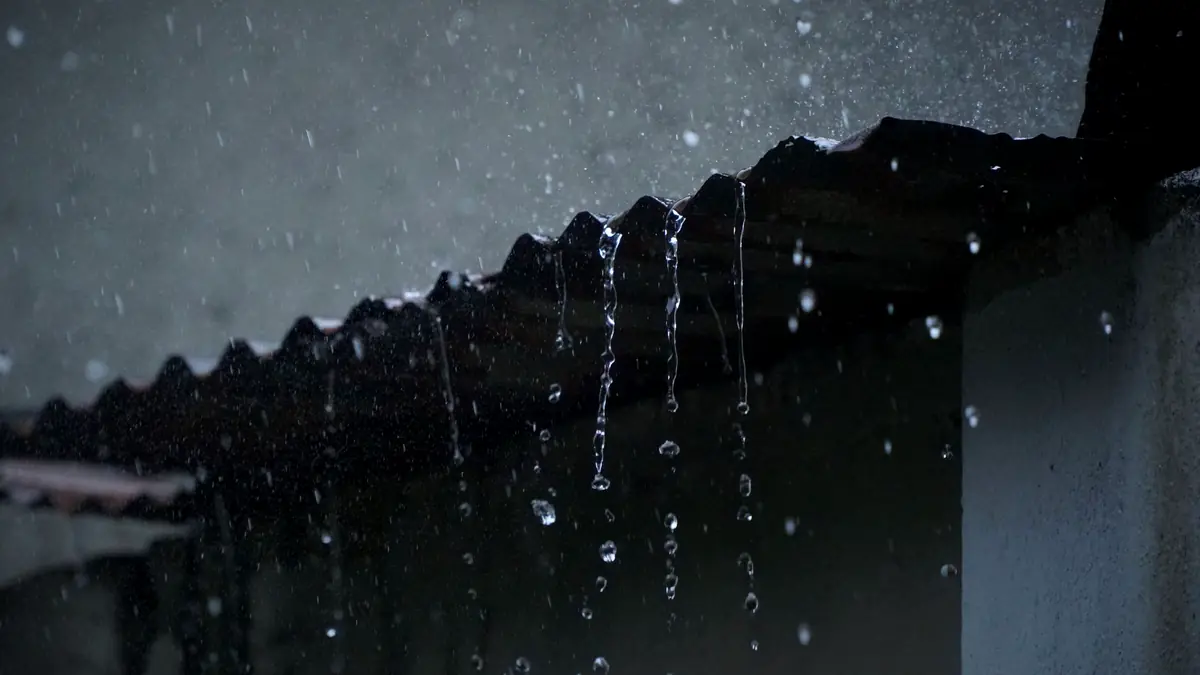
What causes ceiling leaks in a Kent, WA home comes down to three sources: a roof defect, upstairs plumbing or a bathroom, and condensation on cold framing. A ceiling that leaks only when it rains points to the roof system, while a leak in dry weather points to a pipe or an HVAC condensate line. Brown water from a ceiling is clean water stained by drywall and wood on the way down, not from a contaminated source. To find the real source, you trace the water upward from the highest wet point, because water travels along framing before it drips.
What Are the Main Causes of a Ceiling Leak?
The main causes of a ceiling leak are a roof or flashing defect, an upstairs plumbing or bathroom leak, and condensation on cold framing. Water enters at one point, travels along joists and rafters, then pools until it stains the ceiling below. The four sources below account for most ceiling leaks found in a Kent, WA home:
- Roof and flashing defects that admit rain around vents, valleys, and chimneys.
- Upstairs plumbing and fixture leaks from supply lines, drains, and worn caulk.
- Condensation on cold surfaces where warm, moist air meets attic framing or ducts.
- Clogged or overflowed drains and gutters that back water up under the roof edge.
Each source leaves a different clue, so the next sections separate rain-driven leaks from dry-weather ones.
How Does a Roof Leak Cause a Ceiling Stain?
To reach the ceiling, roof water enters through a failed flashing, a cracked vent boot, or a worn valley, then tracks along the rafters before it drips. The drip point usually sits downhill of the real breach, so the stain lands several feet from where the water actually entered. That offset is why a roof leak misleads: the wet spot marks where water left the framing, not where it got in. Kent, WA sits in a wet marine climate with a long rainy season from autumn through spring (NWS Seattle, 2024), so roof-origin leaks surface often once the rain returns.
Can an Upstairs Bathroom or Plumbing Pipe Leak Into the Ceiling Below?
Yes, an upstairs bathroom or plumbing pipe is one of the most common sources of a ceiling leak in the room directly below. Specific culprits include a leaking supply line, a failed drain or trap, worn shower-pan or tub caulk, and an overflowed toilet or sink. These leaks often appear with no rain, which separates a plumbing source from a roof source. A supply-line leak drips steadily because the line stays pressurized, while a drain leak shows only when the fixture runs.
Does Condensation Cause Ceiling Leaks?
Yes, condensation causes what looks like a ceiling leak when warm, moist air meets cold framing, ductwork, or an uninsulated attic surface. Damp, cool conditions around Puget Sound make attic and duct condensation a real cause in Kent, WA homes, not a rare one. An HVAC condensate line that clogs or backs up is a related non-rain source that drips near the air handler. Proper attic ventilation and insulation reduce the cold surfaces where moisture collects (DOE, 2024).
Why Does a Ceiling Leak Only When It Rains?
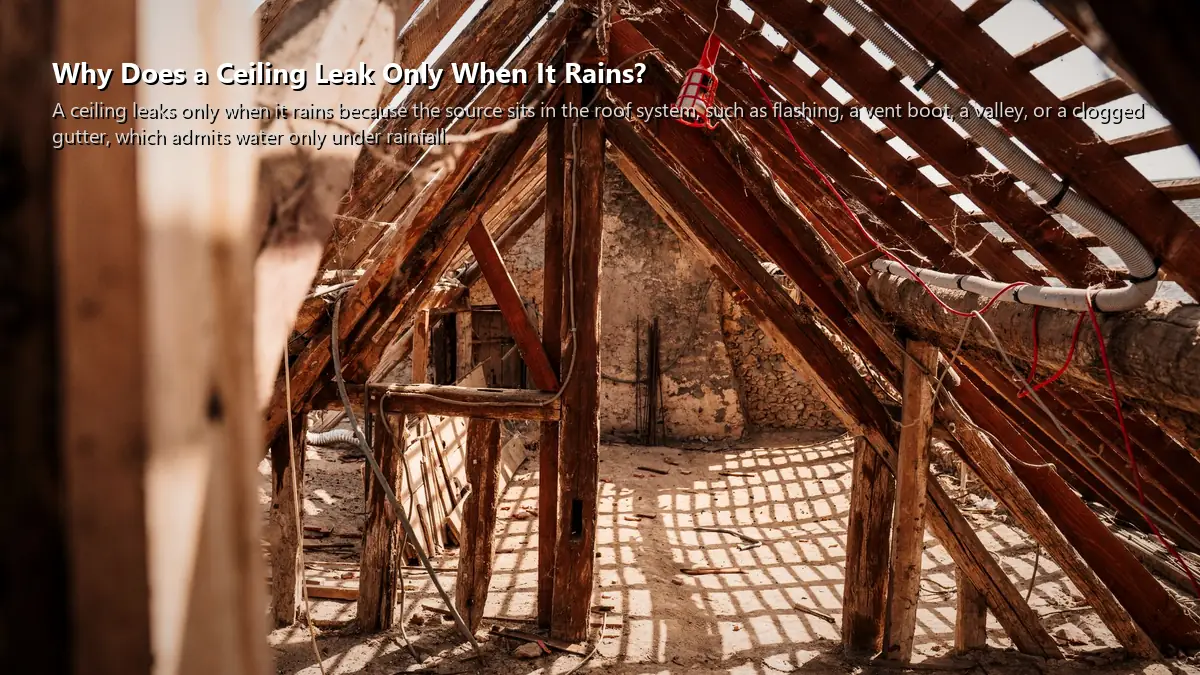
A ceiling leaks only when it rains because the source sits in the roof system, such as flashing, a vent boot, a valley, or a clogged gutter, which admits water only under rainfall. Plumbing and condensation leaks appear in dry weather, so a strict rain-only pattern narrows the search to the roof. Kent, WA’s rainy season is when these leaks tend to show, because the roof defect stays dry and silent until sustained rain drives water through it. A leak that tracks the weather this closely is a roofing problem until proven otherwise.
What Causes a Ceiling to Leak From the Inside With No Rain?
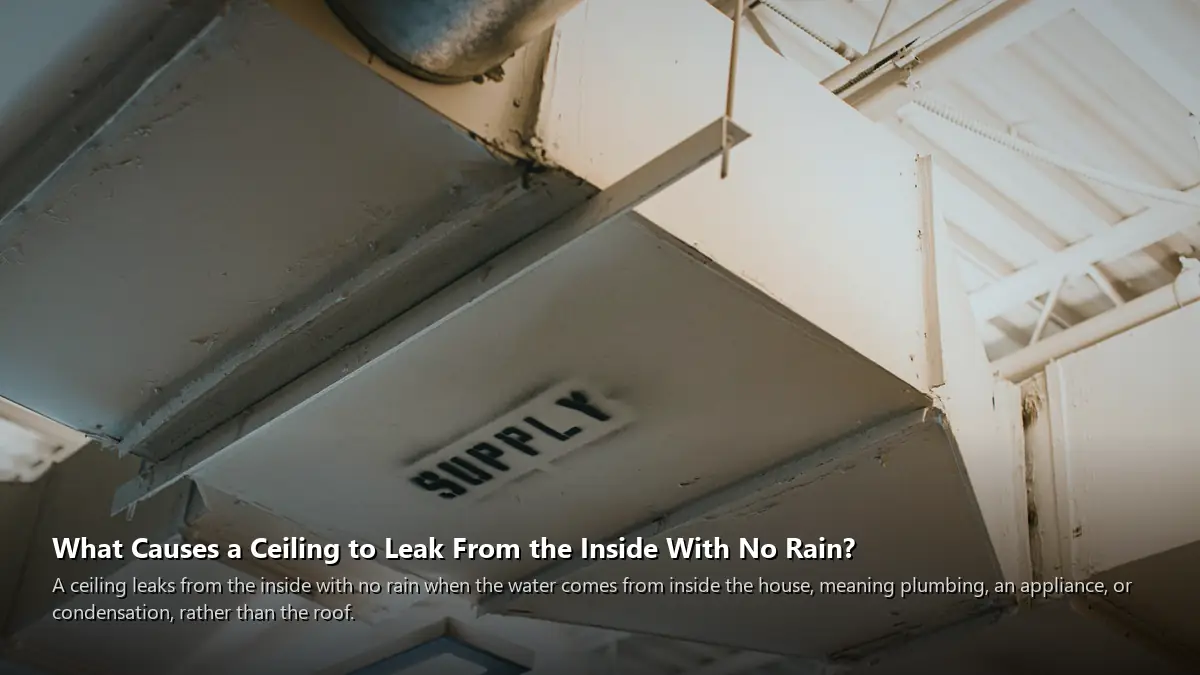
A ceiling leaks from the inside with no rain when the water comes from inside the house, meaning plumbing, an appliance, or condensation, rather than the roof. These sources run on the home’s own water and moisture, so they ignore the weather entirely. The four dry-weather sources below cover most no-rain ceiling leaks:
- Supply and drain line leaks that release water whenever a fixture is used or pressurized.
- HVAC condensate backups that overflow a clogged drain line near the air handler.
- Appliance overflow from an upstairs washer, dishwasher, or water heater.
- Condensation on cold ducts or framing where warm household air meets a chilled surface.
A dry-weather leak that keeps spreading points back to one of these, which the next question helps read from the water’s color.
Why Is the Water Leaking From the Ceiling Brown?
Water from a ceiling runs brown because clean water dissolves tannins and residue from drywall, wood framing, and insulation as it travels. The brown color comes from the building materials the water passes through, not from the water being dirty at the source. A brown stain signals that the water has sat and moved through the assembly, so the leak may be older or hidden behind the ceiling. A brown stain still needs drying, because trapped moisture can grow mold within 24 to 48 hours (EPA, 2024).
How Do You Find the Source of a Ceiling Leak When There Is No Obvious Leak?
To find the source of a ceiling leak, you trace the water upward from the highest wet point, because water travels along framing before it drips. Finding the source means working against the flow, from the visible stain back to the breach above it. These four steps locate most hidden ceiling leaks:
- Mark the wettest point on the ceiling and note the stain’s high edge.
- Check the space directly above, whether that is a bathroom, an attic, or a pipe run.
- Inspect the roof or plumbing uphill of that point for a flashing, boot, or line defect.
- Test with controlled water if no rain is forecast, running a hose or fixture to recreate the drip.
A moisture meter and a thermal camera are tools an IICRC S500 restoration company uses to map hidden water inside the cavity, which is how a restoration crew confirms the source before any repair.
Once You Find the Cause, Will a Wet Ceiling Dry Out on Its Own?
No, a wet ceiling rarely dries out on its own because moisture stays trapped inside the cavity and insulation long after the surface looks dry. Insulation holds water against the framing, so the drywall can feel dry while the assembly behind it stays wet. That trapped moisture is why speed matters, since mold can begin within the EPA 24 to 48 hour window (EPA, 2024). The next question is whether that wet ceiling will dry by itself once the leak stops, covered in will a wet ceiling dry out on its own.
Frequently Asked Questions About Ceiling Leaks
How do you know if a ceiling leak is serious?
To know if a ceiling leak is serious, you watch for sagging, active dripping, a spreading stain, or a bulge holding water, all of which signal structural risk. A sagging or bulging ceiling can hold pounds of water and fail without warning, so that symptom ranks highest. A stain that grows over hours means the leak is active, not old. Whether ceiling water damage is dangerous depends on how far the water has spread and how long it has sat.
How expensive is it to fix a leaking ceiling?
A leaking ceiling runs $X-$Y in most homes to repair, depending on the leak source, the ceiling material, and how far the water has spread. Fixing the source comes before repairing the ceiling, because new drywall over an active leak fails again. The price is set after an inspection confirms the cause and the extent of hidden moisture. A small stain costs far less than a collapsed section that soaked insulation and framing.
How can I stop water leakage from my ceiling?
To stop water leakage from a ceiling, you cut power to the area, catch the water, relieve a bulging ceiling, and shut off the source before any repair. Cut the electricity to affected lights and fixtures first, because water and wiring together carry a shock risk (CPSC, 2024). Catch the drip in a container, then puncture a small hole in a bulging ceiling to drain trapped water safely. Stopping the drip is not the same as fixing the cause or drying the cavity, which still has to follow.
What do I do if my ceiling starts leaking?
If a ceiling starts leaking, you move belongings, contain the water, shut off the source if reachable, and call a water damage restoration company in Kent, WA to find and dry it. Move furniture and electronics clear, then contain the water before it spreads to walls and floors. Shut off the home's water supply if the source is a pipe or fixture you can reach. Call the number on this page for ceiling water damage restoration in Kent, WA to trace the leak and dry the structure.