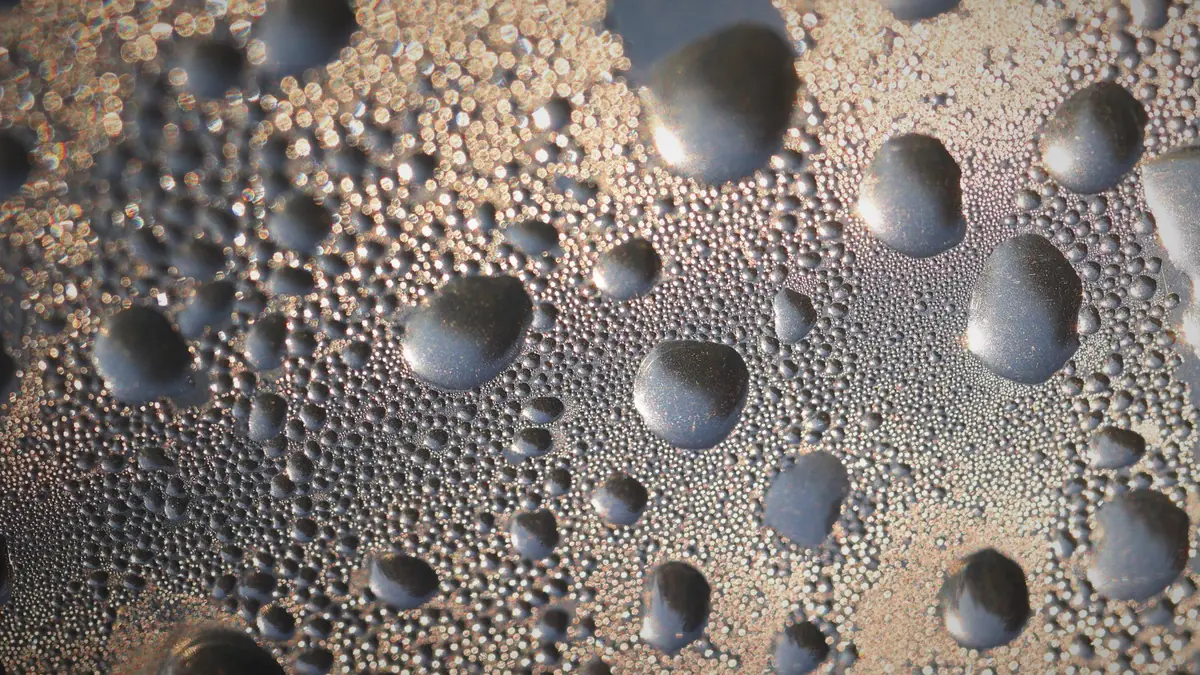
Water pooling around a water heater leaking onto the floor is normal only when the moisture is condensation or a true leak, and condensation is the harmless one. Condensation beads evenly across a cold tank and dries within an hour, while a real leak drips from one point and keeps refilling no matter how often you wipe it. A leak stops being normal when water comes from the bottom seam, the top fittings, or runs continuously from the relief valve. A water heater that keeps leaking damages flooring and framing, signals the tank is failing, and traces back to corrosion, sediment, loose fittings, or a failing relief valve.
What Is a Normal Water Heater Leak?
A normal water heater leak is usually not a leak at all but condensation, surface moisture that forms when cold water inside a new or refilled tank chills the steel below the dew point of the surrounding air. Condensation forms on the tank, settles in the drain pan, and clears as the heater warms the water back to temperature. The moisture sits as a thin film, not a stream, and evaporates once the burner or element raises the tank above the surrounding air’s dew point.
Brief condensation shows up in predictable moments: right after a cold-water refill, on a cold Kent, WA morning, or in the first day or two after a new install. Each of those events resolves on its own within about an hour as the tank heats. Genuine leaking water behaves differently, because a true leak never stops on its own and keeps replacing whatever you wipe away.
Is a Small Amount of Water in the Drain Pan Normal?
A small amount of water in the drain pan is normal only if it is condensation drip that evaporates and never refills. The drain pan sits under the tank to catch small amounts of water and route it away from the floor through a drain line, protecting the surface below the unit. A pan that dries out between cold cycles is doing its job against harmless condensation, not a leak.
Standing water in the pan, or water that returns after the pan is wiped dry, means a real leak rather than condensation. In a Kent, WA home, that pan protects the subfloor beneath a garage or closet install, where a slow leak can soak framing for weeks before anyone notices the floor is wet.
How Do You Tell Condensation From a Real Water Heater Leak?
To tell condensation from a real leak, you dry the tank completely, then watch where water returns and whether it stops. Wipe the tank, the fittings, and the pan until every surface is dry, then check back over the next hour. Condensation stays gone until the next cold cycle, while a real leak reappears from the same fixed point within minutes. The table below separates the two by the signs a homeowner can see without tools.
| Sign | Condensation (normal) | Real leak (not normal) |
|---|---|---|
| Where moisture appears | Evenly across the whole tank | One fixed point: a fitting, valve, or seam |
| Timing | Clears in about an hour as the tank warms | Steady and refilling, never stops on its own |
| Amount | Light film of beads | Puddle on the floor or a running trickle |
| What triggers it | A cold refill or cold weather | Constant, regardless of weather or use |
| Drain pan | Dry or slowly evaporating | Filling and holding water |
| After wiping dry | Stays dry until the next cold cycle | Returns to the same spot within minutes |
When the water returns to one point and the pan refills, the moisture is a leak that needs a shut-off and a dry-out, not condensation that clears itself.
What Does Water Heater Condensation Look Like?
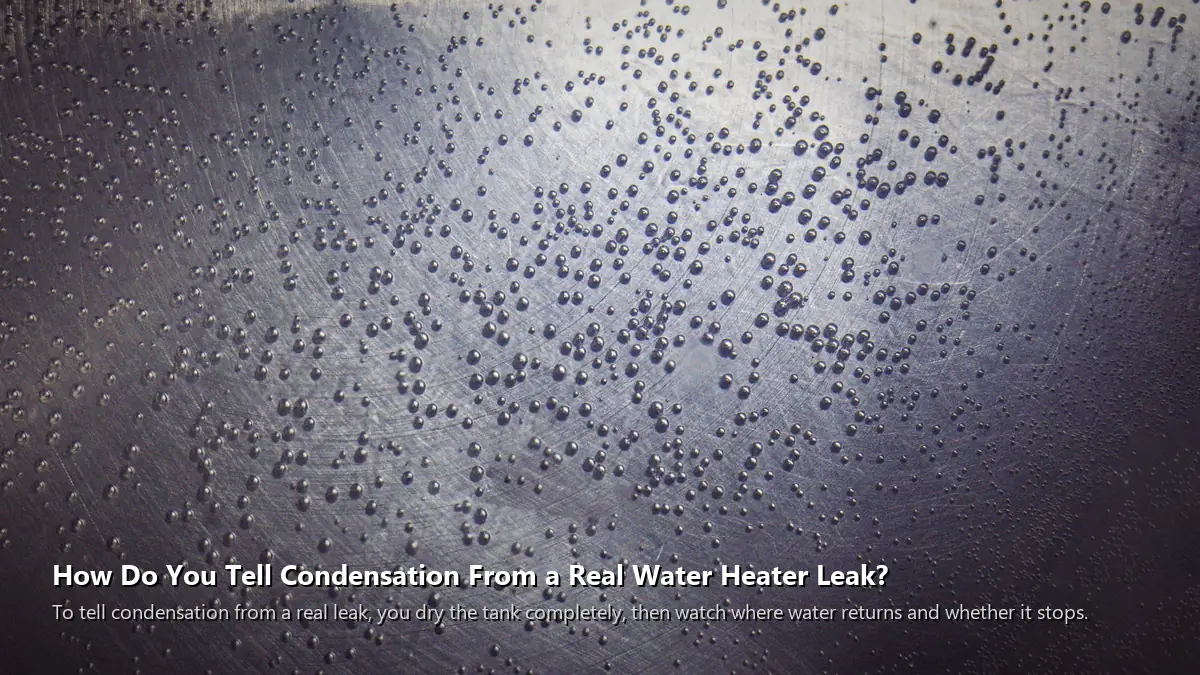
Water heater condensation looks like a light, even film of beads across the outside of the tank, heaviest on a cold morning or right after the tank refills with cold water. The beads coat the metal without any single source point, the way a cold glass sweats in a warm room. As the burner or heating element warms the water, the film dries upward from the base and disappears.
Gas models can produce more condensation during heavy hot-water use, because rapid refills send cold water through the tank faster than the flame can warm it. That extra sweating is still condensation as long as it coats the tank evenly and clears once demand drops.
What Does an Actual Water Heater Leak Look Like?
An actual water heater leak looks like water tracing from one point – a fitting, a valve, or a seam – that keeps returning after you wipe it dry. The water follows a visible path down the tank from its source and pools in the same spot every time. Three source points account for most leaks: the cold and hot water connections at the top, the drain valve at the bottom, and the temperature and pressure relief valve on the side.
Once a single wet point keeps refilling, shut the water supply off at the valve above the heater and dry the area so the source stays visible. Stopping the flow and drying the floor protects the subfloor while the problem is diagnosed and handled.
When Is a Leaking Water Heater Not Normal?
A leaking water heater is not normal when water comes from the tank itself or runs continuously, which points to pressure, corrosion, or a failed valve rather than condensation. The following signs separate a failing tank from harmless surface moisture:
- Bottom-of-tank leaking that pools under the unit and refills the drain pan, a sign the inner tank has corroded.
- Top-fitting leaking that tracks down from the cold or hot water connections and never dries.
- Relief-valve discharge that drips steadily from the temperature and pressure valve instead of releasing once and stopping.
- Floor pooling that spreads across the slab or soaks the subfloor around the base.
Any of these four signs means the moisture is a true leak that keeps feeding itself, not condensation that clears. Steady pressure or temperature discharge in particular is a safety signal, because the temperature and pressure relief valve only opens against real pressure or heat inside the tank (CPSC, 2023).
What Does It Mean When a Water Heater Leaks From the Bottom?
A water heater leaking from the bottom usually means the inner tank has corroded through, and that type of leak cannot be sealed. Water seeping from under the unit has passed through the steel tank wall, which no patch or sealant repairs. A rusted tank floor means the unit needs replacement rather than repair.
A bottom leak can also come from a loose or failing drain valve near the base, which is a repairable part rather than a dead tank. Checking whether the water starts at the drain valve or seeps from the seam decides whether a plumber tightens a fitting or the tank comes out.
What Does It Mean When a Water Heater Leaks From the Top?
A water heater leaking from the top usually means a loose or corroded inlet or outlet connection, which is often repairable before it reaches the tank body. The cold water inlet and hot water outlet thread into the top of the tank, and either joint can loosen or corrode enough to weep. Caught early, a top connection leak is one of the simpler water heater repairs.
A top leak can run down the side of the tank and collect at the base, where it mimics a bottom leak. Trace the water to its highest wet point before deciding the tank has failed, because a dripping top fitting and a corroded tank floor call for very different fixes.
Is Water Dripping From the Pressure Relief Valve Normal?
No, steady water dripping from the temperature and pressure relief valve is not normal and signals excess pressure or temperature inside the tank. The temperature and pressure relief valve, often called the T&P valve, is a safety device that protects the tank from bursting, and it may release a small, occasional discharge during normal heating (CPSC, 2023). A continuous drip is different, because it means the valve is working against a real problem rather than venting once.
A steady relief-valve drip points to a too-high thermostat setting, thermal expansion in a closed plumbing system, or a failing valve. Do not cap, plug, or tighten the valve closed, because blocking the one component designed to vent pressure removes the tank’s main safety release.
How Serious Is It If a Water Heater Keeps Leaking?
A water heater that keeps leaking is serious because the water spreads into flooring, drywall, and framing while the tank moves closer to failure. The stakes run two ways. On the appliance side, a corroding tank near the end of its 8-to-12-year service life rarely recovers, and a leaking tank body only gets worse (DOE, 2024). On the property side, standing water in a Kent, WA garage, closet, or crawl space soaks the subfloor and invites mold once materials stay wet.
A leak also widens over time rather than settling, so a slow weep this week becomes a steady flow later. Wet building materials that are not dried within 24 to 48 hours can begin growing mold, which is why the EPA sets that window for drying water-damaged materials (EPA, 2024). A local water heater leak cleanup in Kent, WA crew extracts the standing water, then dries the structure to the standard restoration companies follow under IICRC S500 (IICRC, 2021) so the subfloor and framing dry before mold sets in. Call the number on the page once the floor is wet and the leak keeps refilling.
What Causes a Water Heater to Leak in the First Place?
A water heater leaks because of corrosion, sediment buildup, high water pressure, loose fittings, or a failing relief valve – the specific source decides whether it can be repaired or the tank needs replacing. Corrosion and a rusted tank floor usually mean replacement, while a loose fitting or a worn valve is a repair. For the full breakdown of each source and which ones are fixable, read what causes water heater leaks.
Frequently Asked Questions About a Leaking Water Heater
Am I in Danger if My Water Heater Is Leaking?
Yes, a leaking water heater can be a danger because water near gas burners, electrical connections, or hot discharge creates shock, scald, and slip risks. Water pooling around the electrical junction or a gas burner assembly turns a tank problem into an electrical or burn hazard (CPSC, 2023). Keep off a wet floor near the unit and shut power or gas to the heater before standing in the water. For the full safety breakdown, see whether a leaking water heater is dangerous.
Can I Still Use My Water if My Water Heater Is Leaking?
Yes, you can usually still use cold water, but you should shut off the water heater's supply valve to stop the leak from feeding the tank. Cold water lines run separately from the heater, so the taps still work while the unit is isolated. Running hot water pulls more water through a leaking tank, so limiting use slows the damage until the leak is handled. The shut-off sequence is covered step by step in the first shut-off steps for a leaking water heater.
Can I Still Shower if My Hot Water Heater Is Leaking?
You can briefly shower if the leak is slow and the power or gas is still safely on, but each use pushes more water through the failing tank. Every hot-water draw refills the tank with cold water, which the leak then releases onto the floor. A fast leak, water near electrical parts, or a pooling floor means stopping use and shutting the unit down instead of risking another cycle.
How Long Will a Hot Water Heater Last Once It Starts Leaking?
Once a tank itself starts leaking, a hot water heater lasts days to weeks, not years, because tank corrosion only spreads. A leak from the tank body signals the steel has rusted through, which no repair reverses, so replacement follows. A leak from a fitting or the drain valve is different and is often repairable, leaving the rest of the tank in service. The 8-to-12-year service life gives context for an aging unit, since a tank near that age that begins leaking from the body is at the end of its run (DOE, 2024).