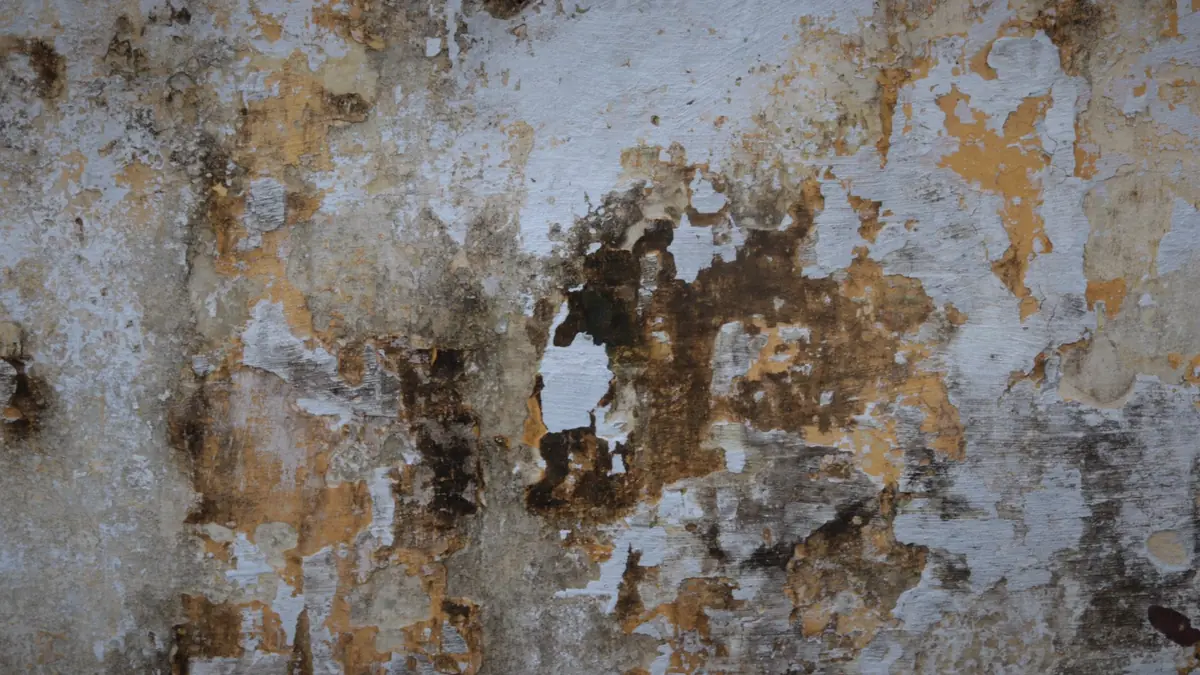
A water stain on ceiling but no leak usually means the water source has already stopped, drips only intermittently, or sits hidden above the drywall. A crisp, dry ring marks an old leak, while a soft, spreading damp mark signals an active one. Condensation alone can stain a Kent, WA ceiling without any plumbing or roof leak behind it. A brown stain points to dirty or mineral-laden water, while a white or chalky mark points to condensation or clean-water minerals. A stain ringing a ceiling light is an electrical hazard, and any surface left damp beyond 24 to 48 hours can start growing mold (EPA, 2024).
Why Is There a Water Stain on the Ceiling but No Leak?
A water stain appears on the ceiling with no visible leak because the water source has already dried, drips only intermittently, or sits hidden above the drywall. Water travels along a ceiling joist and stains drywall several feet from the real entry point. A single drip above the ceiling spreads across the plasterboard, dries, and remains as a mark long after the moisture stops. The stain you see records where water pooled and dried, not where it entered the structure. A gap of several feet between the entry point and the visible mark is common, because framing carries water sideways before it soaks through.
The most common causes of a dry or source-less ceiling stain are:
- An old leak that already dried and left a mineral ring behind.
- Condensation from attic or exterior-wall air meeting cold drywall.
- A slow plumbing drip from a supply or drain line above the ceiling.
- Intermittent roof ingress during heavy or wind-driven rain.
- Water tracking along joists from a source several feet away.
Reading the age and edges of the mark tells these causes apart, starting with whether the leak is old or still active.
Could an Old Leak Still Leave a Mark After It Dried?
Yes, an old leak leaves a permanent stain even after the ceiling has fully dried. As water evaporates it leaves behind minerals and wood tannins that bond to the paint, so a dried ring stays visible without feeling damp or spreading. You still confirm the original source once the mark is dry, because a dried stain that darkens again after rain points to an intermittent leak that will recur and widen.
Can a Slow Plumbing Drip Stain the Ceiling From Above?
Yes, a slow plumbing drip from a supply line or drain above the ceiling stains drywall long before any water drips through. Supply lines, drain lines, and a leaking upstairs bathroom are the common hidden sources on a first-floor or mid-level ceiling. The mark often sits well away from the leak itself, because water runs along framing before it soaks into the drywall and shows on the surface. A pinhole drip can feed a stain for weeks without ever dripping onto the floor below.
Can Roof Water Enter Only During Heavy Rain?
Yes, roof water can enter only during heavy or wind-driven rain and leave a stain that looks dry between storms. Kent, WA sits under frequent Puget Sound rain, and wind-driven rain pushes water past flashing and roof vents that stay watertight in calm weather (NWS Seattle, 2024). The ceiling reads dry on a clear day because the entry point only admits water while the storm drives it sideways, then the drywall surface dries while the stain stays fixed in place.
Is the Stain From an Old Leak or an Active One?
The key difference between an old (inactive) stain and an active one is whether the mark still feels damp and continues to spread. You read the edges, press the center for dampness, and compare the mark across several days before deciding. An old stain holds its shape and stays dry, while an active one grows and darkens as fresh water keeps feeding it. Recognising these signs is the same skill covered in the signs of water damage in a ceiling, where staining is one of several indicators.
| Sign | Old / inactive leak | Active leak |
|---|---|---|
| Dampness to touch | Dry and room-temperature | Damp and cool |
| Edges | Crisp, sharp ring | Soft, feathered, spreading |
| Color change over time | Stable and unchanged | Darkening or growing |
| Smell | None | Musty or earthy |
A moisture meter reads elevated moisture behind an active stain and normal readings behind a dried one, which settles the question when touch alone is unclear. An active stain needs drying within 24 to 48 hours before mold begins (EPA, 2024).
Can Condensation Cause a Water Stain on the Ceiling?
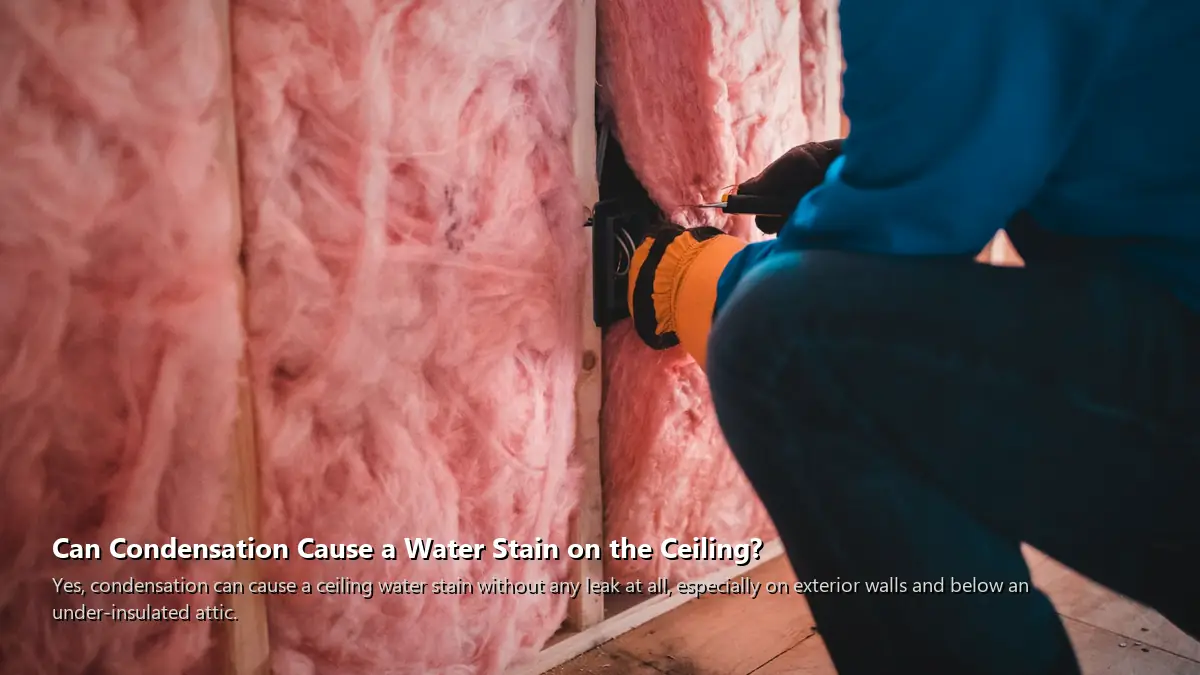
Yes, condensation can cause a ceiling water stain without any leak at all, especially on exterior walls and below an under-insulated attic. Warm indoor air rises, meets a cold ceiling surface, and the moisture in that air condenses into liquid water on the drywall. Repeated wetting and drying over the cold months leaves a pale or chalky mark rather than a single defined ring. Kent, WA winters stay cold and damp, so under-insulated and poorly ventilated attics raise condensation risk across Puget Sound homes (WSU Extension, 2024). A condensation stain spreads diffusely near edges and corners in most homes, which separates it from the sharp ring a leak leaves at a single entry point.
What Does a Brown or White Water Stain on the Ceiling Mean?
A brown water stain means dirty or mineral-laden water from a roof or plumbing source, while a white or chalky stain points to condensation or mineral deposits from clean water. The color of a ceiling stain signals its likely source as follows:
- Brown or tan ring: dirty roof or drain water carrying soil and debris.
- Yellow ring: a slow, long-standing leak carrying dissolved wood tannins.
- White or chalky mark: condensation or clean-water mineral residue.
- Dark or black patch: possible mold growth rather than a surface stain.
Color narrows the likely source but does not confirm whether that source is still active, so a pale mark and a brown ring both still need their origin traced before any repair.
What Does a Water Stain Around a Ceiling Light Mean?
A water stain around a ceiling light fixture means water is pooling near live wiring, which is both an electrical and a structural hazard. Turn off power to that circuit at the breaker before you touch the fixture, and do not switch the light on while the ceiling is wet. Water inside a fixture box can short the circuit or start a fire, so the fixture stays off until the area is fully dry (CPSC, 2024). A local water damage restoration company handles ceiling water damage repair in Kent, WA so a wet fixture is assessed safely rather than investigated with the power on.
Does a Water Stain on the Ceiling Always Mean Mold?
No, a water stain on the ceiling does not always mean mold — but any surface left damp longer than 24 to 48 hours can start growing it (EPA, 2024). A dry, old stain is just a mineral mark on the paint, while a stain fed by an active or hidden source is where mold risk begins. Telling a stain apart from actual mold is the same identification task covered for water damage vs mold damage across a home. A dark or spreading patch with a musty smell leans toward mold and warrants a professional assessment (CDC, 2024).
How Do You Find the Source of a Ceiling Stain With No Visible Leak?
To find the source of a ceiling stain with no visible leak, you trace the water upward and outward from the stain, since water rarely enters directly above the mark. The steps to locate a hidden ceiling source are:
- Check the room or roof directly above and uphill of the stain.
- Inspect plumbing supply and drain lines running over that ceiling.
- Look for attic condensation, gaps in insulation, or a cold spot.
- Run water or wait for the next heavy rain to see if the stain darkens.
- Call a water damage restoration company in Kent, WA if the source stays hidden or the stain is active.
Most hidden ceiling stains trace back to a handful of underlying problems, which what causes ceiling leaks breaks down by roof, plumbing, and condensation source.
Frequently Asked Questions About Ceiling Water Stains
When should you worry about a water stain on the ceiling?
You should worry about a ceiling water stain when it spreads, sags, feels damp, or sits near a light fixture. Growth over several days, soft or bulging drywall, a musty smell, or any fixture involvement all point to an active source rather than an old mark. An active source needs drying within 24 to 48 hours before mold begins (EPA, 2024).
What should you do when the ceiling is wet but there is no noticeable leak?
To handle a ceiling that is wet with no noticeable leak, you contain the water first and find the source second. Place a container under the lowest point of the sag, and relieve a visible bulge carefully only if the ceiling is safe to reach. Keep power off to any nearby fixture, then contact a local water damage restoration company in Kent, WA.
What does it mean if a brown ceiling stain is not wet to the touch?
A brown ceiling stain that is not wet to the touch usually marks an old leak that has already dried rather than an active one. A dry brown ring can still hide an intermittent source, such as rain-only roof ingress, so check it again after the next storm. Confirm the source is inactive before the stain is sealed or painted over.
Can a water stain on the ceiling appear only in winter?
Yes, a ceiling water stain can appear only in winter, when cold, damp Kent air causes condensation on under-insulated ceilings. Winter-only stains near exterior walls or the attic usually signal condensation rather than a leak. Winter stains that follow rain or a hard freeze instead point to roof or burst-pipe water (WSU Extension, 2024).